
Each day, we -along with our vehicles and other stuff- become increasingly more connected to the internet and Internet of Things. A byproduct of increased connectivity is the massive amount of data generation and storage. Every website hit, social media post, or GPS navigation search generates data. This may seem a bit scary due to the privacy implications. However, when this information is safely stored and aggregated, it can also be used to plan better transportation systems.
What Is Big Data Exactly?
Big Data can be defined as any massive, complex flows of data too large for traditional software to process. Big Data may be structured or unstructured- which refers to whether records have a consistent or inconsistent format. Structured data are easy to search, while unstructured data are difficult without sophisticated tools. Regardless, these massive datasets can ultimately offer significant inputs to help solve real-world issues.
Big Data in Transportation
Transportation planning is concerned with understanding regional travel activities; identifying challenges and barriers; and designing transportation systems to address current and future needs.

For decades, SEMCOG has used travel demand modeling process to estimate travel in Southeast Michigan. The data most important to developing the travel demand model are gathered through household travel surveys, which provide valuable insight into where, when, why, and how people travel. These surveys, however, are expensive to conduct, typically only reach a small percentage of a population, and require data cleaning to eliminate outliers and fill in gaps. This often results in the need for supplemental surveys, adding time and costs. More importantly, however, is survey data can quickly become obsolete as travel behaviors change due to environmental factors such as new land uses or technologies.
This is where new data sources, or big data, become especially useful to planning partnerships like SEMCOG. While budget constraints are the norm, utilizing up-to-date and voluminous data is increasingly more important to transportation planning. Big data can often be acquired for a fraction of the costs of traditional travel survey instruments. Perhaps the most common source of this transportation big data comes from mobile phones. That’s right. The devices that most of us carry at all times can provide a treasure trove of valuable insights into travel patterns that planners, engineers, and elected officials can use to develop efficient, safe, and equitable transportation systems. Anonymized, aggregated mobile phone data can provide real-time information about slowdowns and bottlenecks on freeways, identify new trip destinations, and report back which routes are taken.
Mobile phones are not the only source of big data for transportation. Smart card data can be used to understand transit passenger behaviors. Bluetooth and WiFi sensors can provide insight into traffic flow and reliability. Many commercial trucks and vehicles are equipped with telematics that also provide an ocean of passive data that can be leveraged for better insights which can inform better design and decisions about the transportation system. Many of the apps we use to track our biking or walking provide valuable data, when aggregated, into where people are going, what routes they choose to take there, and what types of facilities are necessary.
Limitations
There are a few drawbacks of big data use in transportation planning. While the costs to obtain origin-destination information are much lower, the precision of the data or veracity is not always on par with the traditional survey model. Also, because a lot of this data is generated by expensive devices, insights into many socioeconomic needs cannot be made without data from additional sources.
Big Data Use at SEMCOG
The Federal Highway Administration (FHWA) places great importance on performance-based planning and programming. States and metropolitan planning organizations (MPOs) like SEMCOG are called to incorporate performance-based planning into decision-making. Big data allows SEMCOG and other planning organizations to measure how effective policies and actions enacted throughout the region are to realizing visions and goals.
To ensure a performance-based approach to planning, SEMCOG has used big data in a number of ways. SEMCOG engineers and modelers have validated the regional travel demand model to ensure the estimated travel patterns produced by the model are reasonable and useful.
SEMCOG also uses big data for regional congestion analysis. Data from probe vehicles and anonymized mobile phone data are used to monitor travel speeds on roadways to determine congestion levels and evaluate reliability and performance on the roadways. As system conditions are observed, we work with partners to develop mitigation strategies.
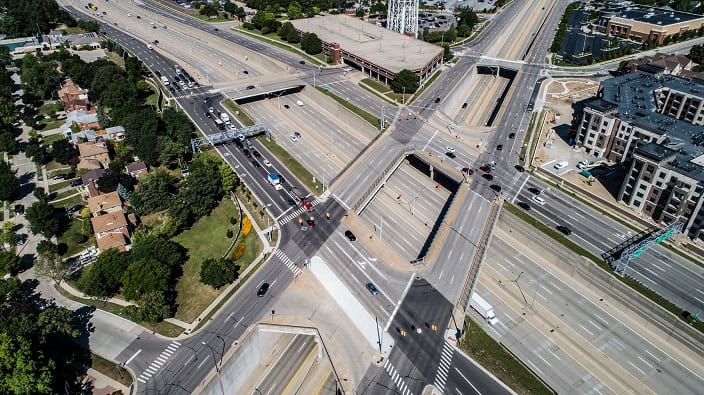
Throughout the COVID-19 pandemic, SEMCOG has published dashboards tracking trip-making with big data made available by Apple and Google. Among other things, these dashboards use location-based mobile phone data to show how the pandemic has affected where we are going. These data can be used to anticipate needs should similar events occur in the future and allow local agencies and municipalities to respond quickly to events.
Big data is not just for vehicle travel. SEMCOG has used data from vendors such as Strava, to develop insight into where people are walking and biking. This data helps planners better understand non-motorized mobility patterns and identify opportunities for investments to ensure safety and maximize mobility across our region outside of a vehicle.
As more types of data become readily available and new analytics are formed, the possibilities for future uses are nearly limitless. For instance, big data could be used to further enhance transportation safety planning by better identifying crash rates and exposure for non-motorized travelers. It could also be used to facilitate predictive or proactive analyses, which can also be used to develop strategies to increase safety, efficiency, and equity on our transportation system.
Big data has the potential to revolutionize how agencies understand travel patterns, implement new inventive strategies, and evaluate performance. These data can also reduce costs and allow for more organizational flexibility to further address transportation issues. Like, most emerging technologies, there are challenges and limitations of the data that must be addressed. However, as these issues are sorted, agencies like SEMCOG will be able to harness the usefulness of these data to support a better, safer transportation system in Southeast Michigan.
Leave a Reply