
On Monday, May 16, SEMCOG employees gathered in our offices for the first time in over two years. In addition to being a reunion, we also celebrated the ribbon-cutting on our newly- renovated office. Our space has been transformed, starting with the downsizing of two floors to one.
To make this dramatic change possible, a lot of thought and planning has gone into the design of our new remote-first hybrid work plan and our new workplace. Before describing SEMCOG’s new paradigm, let us consider the idea of a hybrid workplace more generally.
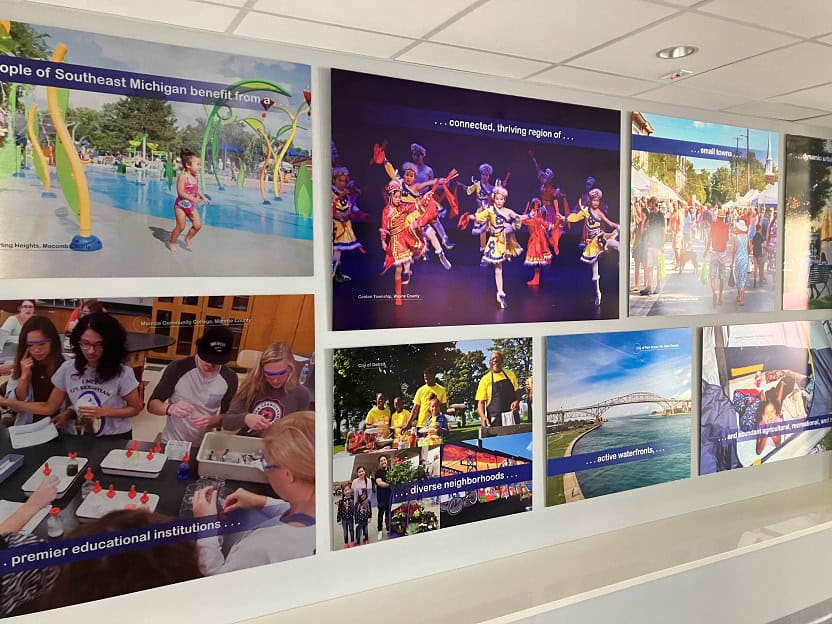
SEMCOG’s reimagined welcome area featuring a photo gallery of regional assets. We look to the present and future quality of life of the people of Southeast Michigan for inspiration.
Hybrid Workplace
The hybrid workplace combines remote work with office work. It may look different at different organizations. It could feature a core group onsite with others working remotely or a staggering of different people in the office on different schedules or specific days where employees attend in-person meetings.
The hybrid workplace allows employees the opportunity to schedule the flexible parts of work around their lives, rather building life around 40 fixed hours in an office each week. For many employees (and employers), it is optimal to balance productive work at context-dependent locations. Employees love the opportunity to work successfully with reduced stress and less commuting.
Benefits of Hybrid Workplace
- Increased employee productivity: Increased autonomy to choose work hours and location; fewer interruptions at home than in the office; repurpose commuting time; and the opportunity to come into the office at times when in-person collaboration is best increases productivity.
- Reduced overhead costs: SEMCOG, along with other organizations, has reduced office space and lowered costs.
- Better employee experience and work-life balance: Greater flexibility increases job satisfaction, which improves performance at work as well as overall employee well-being. An integrated focus on work-life balance helps create a successful hybrid workplace culture.
SEMCOG’s Remote-First Hybrid Work Plan
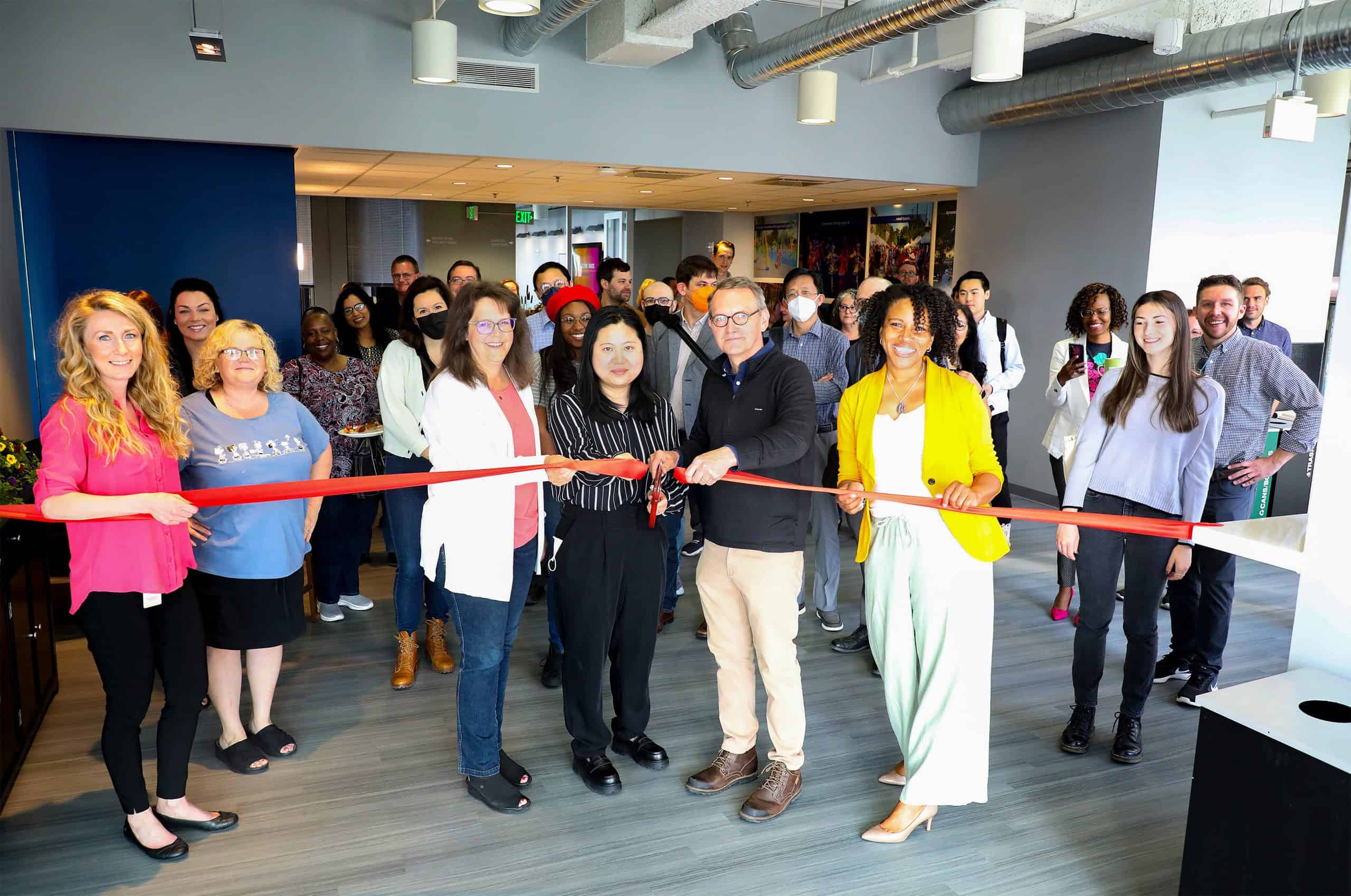
After months of anticipation, we toured our new space and learned about the in-office and remote work plan that continues our commitment to a safe and productive environment. The ample resources, whiteboards, flexible space and variety of software solutions will contribute to a more seamless hybrid collaboration experience for SEMCOG staff and members.

We then received training on expectation in our new remote-first hybrid work plan as well as some of the finer details such as using printers, conference room technology, and hoteling software to reserve work stations.
The office we returned to gives employees the right mix of spaces for productivity in the changing way in which we work. It was great to see and connect with my co-workers and friends in person. It provides an energy that is harder to get through a screen. Being back in the office wasn’t the same. And that’s a good thing.
Leave a Reply