
Transit in Southeast Michigan
Transit is an integral part of our region’s transportation network, comprised of various public transit options and services. Transit addresses the needs of individuals of all abilities, including those who do not have access to personal vehicles. SEMCOG recognizes the importance of transit and the need to coordinate with providers and stakeholders to help connect the region. Regional transit responsibilities are divided between the Regional Transit Authority of Southeast Michigan (RTA) and SEMCOG based on the location of service. With SEMCOG’s support, RTA leads the planning, oversight and implementation of public transit services and systems in Macomb, Oakland, Washtenaw, and Wayne County. SEMCOG exclusively supports transit providers within Livingston, Monroe, and St. Clair County
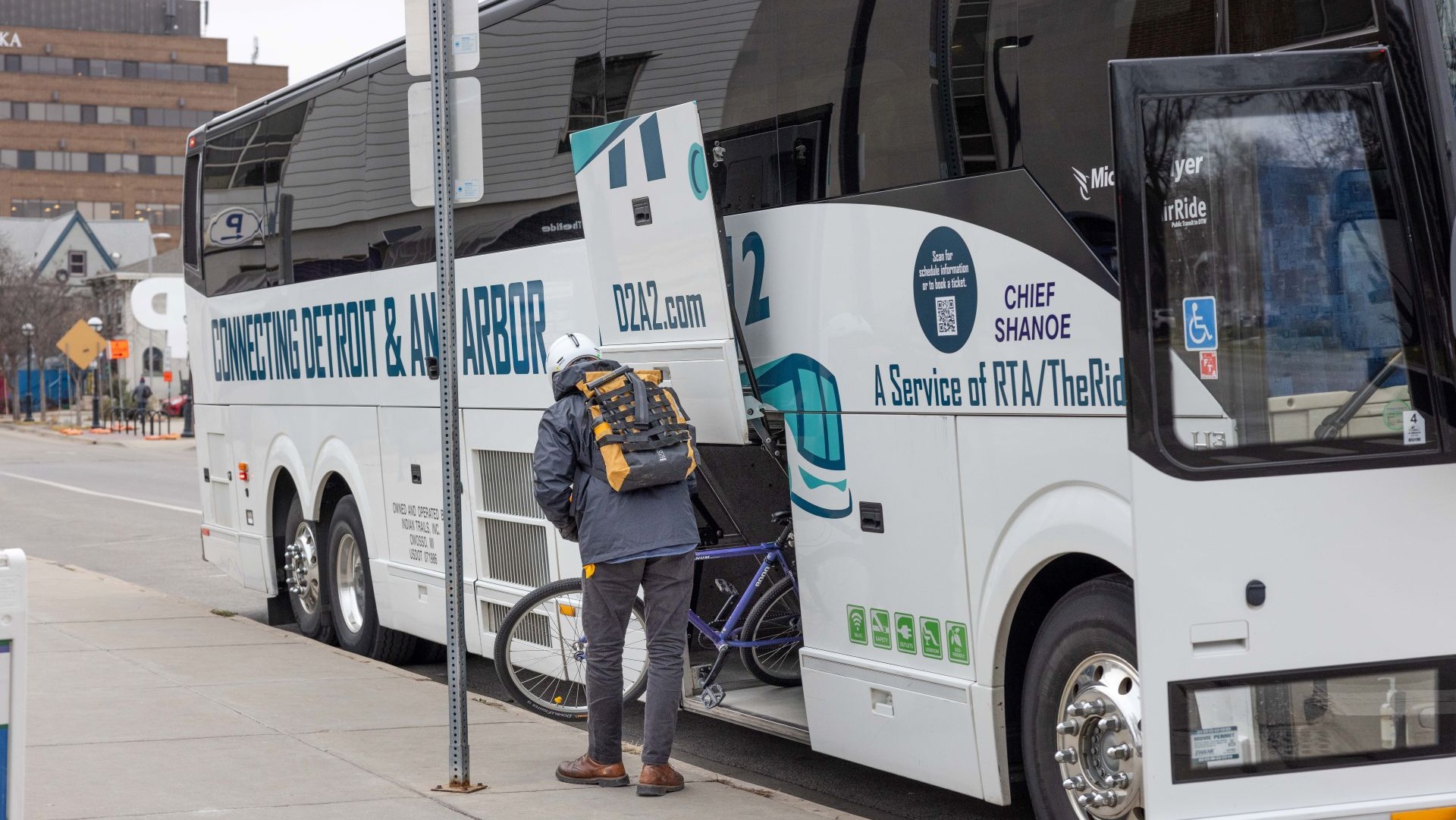
Fixed Route Service
Fixed route service is based on regularly scheduled routes that have designated stops. The region’s fixed route services include buses, streetcar (QLINE), and light rail (Detroit People Mover). In addition, there has been a recent expansion of express and limited stop service within the region, which can be confirmed by accessing the transit providers’ links below. In addition, links are included for each provider that operates paratransit service. Paratransit service provides demand response service to individuals within ¾ mile of fixed route service to individuals that have mobility needs preventing the use of standard transit.
Southeast Michigan Fixed Route Transit Providers
Blue Water Area Transit (BWATC)
Blue Water Area Transit (BWATC) Paratransit webpage
Detroit Department of Transportation (DDOT)
Detroit Department of Transportation (DDOT) Paratransit webpage
Detroit People Mover (DTC)
Lake Erie Transit (LET)
Lake Erie Transit (LET) Paratransit webpage
QLINE
Suburban Mobility Authority for Regional Transportation (SMART)
Suburban Mobility Authority for Regional Transportation (SMART) Paratransit webpage
University of Michigan Campus Transit
University of Michigan Campus Transit Paratransit webpage
Western-Washtenaw Area Value Express (WAVE)
Fixed Route Providers that Connect into the Region
Demand Response Service
Demand-response services provide flexible transit options on vehicles that adjust routes and scheduling based on requests from riders. Demand response is dependent on providers offering the service, which also may include eligibility requirements. The following list does not include all demand response providers as the region includes smaller providers with limited online presence or information available.
Micromobility
Micro-mobility, including electric scooters and bike sharing programs, have gained popularity in urban areas. These options supply last-mile connectivity, reduce congestion, and promote sustainability. The use of electric scooters and bikes can reduce the carbon footprint of short trips, helping to mitigate air pollution and reduce the region’s reliance on personal vehicles
Micromobility
Commuter Connect
Commuter Connect is a program of the SEMCOG and the Ann Arbor Area Transportation Authority (TheRide) that provides a resource for finding travel options like carpool, vanpool, transit, and other options throughout Southeast Michigan. You can also record your trips to see your savings, track your impact, and even qualify for special rewards.
Commuter Connect
Transit Plans, Studies, and Funding
Current Plans and Studies
Previous Plans and Studies
Livingston County Transit Master Plan
MDOT M-3 (Gratiot Avenue) PEL Study
SEMCOG’s Improving Transit in Southeast Michigan: A Framework for Action
The WALLY (Washtenaw and Livingston Line) is a commuter rail project in the US-23 corridor to mitigate heavy congestion between the cities of Howell and Ann Arbor.
Partnering Agencies
FTA Region V
MDOT Office of Passenger Transportation (OPT)
For MDOT OPT questions, please contact Deanna Donahoo at [email protected].
Oakland County Transit
SEMCOG Managed Federal Funding Programs
The following links are internal SEMCOG webpages presenting federal funding programs that are awarded through SEMCOG’s Regional Review Committee which include some limited transit eligibility.
Transportation Access to Core Services
Transportation access to core services is about options — where residents can go, and how they can get there.
The 2025 Transportation Access to Core Services in Southeast Michigan report evaluates how well people across the SEMCOG region can reach key destinations by walking, biking (accounting for comfort levels), using fixed-route transit, and driving.
Additional Information
Regional On-Board Transit Survey
SEMCOG, in partnership with the Regional Transit Authority for Southeast Michigan (RTA) and Southeast Michigan’s transit providers, conducted a regional On-Board Transit Survey (OBTS) of all the fixed-route transit systems in Southeast Michigan. The OBTS is used to help Southeast Michigan plan for improved transit infrastructure and service. Survey responses assist SEMCOG and its partners better understand the travel patterns and choices of transit riders. This also helps planners and decision-makers make more effective improvements and better service transit riders. Approximately 18,000 riders were surveyed in the region, riding at various times during weekdays on the region’s eight transit systems:
- Detroit Department of Transportation (DDOT)
- Suburban Mobility Authority for Regional Transportation (SMART)
- Ann Arbor Area Transportation Authority (TheRide)
- University of Michigan (UM)
- QLINE
- Detroit People Mover (DPM)
- Blue Water Area Transit (BWAT)
- Lake Erie Transit (LET)
The last regional OBTS was completed in 2009, and since then, significant economic, land use, and transit system changes have occurred. Furthermore, the region is interested in enhancing the transit system, including potential rapid transit services, making the need for more up-to-date transit travel information even more critical.
It is important to note that this survey was conducted between fall 2018 and spring 2019 – before the COVID-19 pandemic. The pandemic has affected all facets of life, including the ways people communicate, travel, work, and interact. The OBTS remains a strong indicator of transit rider behavior, especially as it relates to transit dependent riders. At the same time, SEMCOG understands that the pandemic will have a lasting impact on travel behavior. To address this SEMCOG is working with the RTA, the region’s operators, as well as MDOT, the Federal Transit Administration, and our national colleagues to understand the impacts of the pandemic on the region’s travel. Travel behavior has evolved as we learned more about the virus, how to protect ourselves, the ups and downs of outbreaks, and the development of treatments and vaccines. It will continue to evolve and understanding how is vital to interpreting the survey results and the need to adjust our assumptions going forward.
The OBTS provides valuable, information about travel patterns, demographics of transit riders, transit service characteristics, and passengers’ attitudes towards transit services and is extremely important for regional transit planning and the transportation investment decision-making process. Along with providing key input for understanding rider needs for transportation planning, having current data helps make the region more competitive for federal transit funding when it becomes available. Some of the information obtained will be origin, destination, demographics (including vehicle availability and household income), access and egress modes, and public transit use.
2019 SEMCOG Regional On-Board Transit Survey (pdf, 2.1MB)
QuickFacts On-Board Transit Survey (pdf, 0.5MB)
2009-2010 SEMCOG Transit On-Board Survey Report (pdf, 3.3MB)
For more information, please contact Alex Bourgeau, Transportation Modeling And Mobility
Specialized Transportation Services
Specialized transportation services provide transportation options for seniors and persons with physical or mental disabilities. There are many agencies in Southeast Michigan that provide specialized transportation service to local areas for health appointments, employment, shopping, and other purposes.
To better identify individuals with specialized transportation needs and coordinate services across multiple transit providers, transit agencies develop Coordinated Transit-Human Services Transportation Plans. The Detroit Department of Transportation (DDOT) (pdf, 1.3MB), Suburban Mobility Authority for Regional Transportation (SMART) (pdf, 706KB), and Washtenaw County in cooperation with the Ann Arbor Area Transportation Authority (AAATA) (pdf, 657KB) each have developed Coordinated Human Services Transportation Plans that have been approved by the Michigan Department of Transportation and the Federal Transit Administration.
The Coordinated Transit-Human Services Transportation Plan serves as a guideline for grant applications seeking federal funding. The Moving Ahead for Progress in the 21st Century (MAP-21) law requires all entities selected for funding under the Enhances Mobility Seniors and Individuals with Disabilities and New Freedoms Programs (Section 5310) and the Urbanized Area Formula Program (Section 5307) to develop a locally coordinated transit-human services transportation plan specific to the needs of individuals with disabilities, older adults and low-income individuals in their service area in order to access allocated funding. SEMCOG is the designated recipient of the Federal Transit Administration’s Section 5310 and 5307 funds for Livingston, Macomb, Oakland, St. Clair and Wayne Counties. The Ann Arbor Area Transportation Authority receives funds for Washtenaw County.
Contact Deanna Donahoo at (313) 324-3319.