
Michigan is quietly being overrun by foreign invaders. These invaders – plants from other parts of the world – are now spreading out across Michigan’s landscape. These plants directly impact quality of life and economic development efforts in communities all over the state.
The costs are high as efforts to stop their spread will erode the approximately $4 billion blue economy (environment and natural resources) developing in Michigan.
The problem: Phragmites australis, or common reed, are among the invasive plants invading coastal and inland marsh areas, parks, wildlife preserves, greenways, and blueways. This invader has created conditions right for diminishing environmental quality and public use, such as:
- Reduced access for recreational opportunities (e.g., kayaking, canoeing, and hiking);
- Degraded natural beauty; a blighted look and dense infestation can reduce property values;
- Matted root system that eliminates habitat for fish and wildlife;
- Diminished sight lines along waterways, trails, and road intersections that can be a visual hazard to public safety;
- Increased public safety concerns for fire and localized flooding.
Please note the impact of a Phragmites invasion in the “before” shot (left) and the improvement in the “after” following remediation.

Credit: Bob Williams
The CISMA solution: To combat this expansive invasion, local governments and other organizations are joining Cooperative Invasive Species Management Areas (CISMAs). CISMAs are simple, partnership-based management structures where coordinated plans for managing invasive species are developed and implemented collaboratively. Through membership on a CISMA, local governments will find partners willing to share expertise or the expense on joint control activities.
In Michigan, the Department of Natural Resources (DNR) is the state lead in establishing CISMAs and providing funding for local management efforts. There are now 17 CISMAs across Michigan, covering most of the state. The Michigan Invasive Species Grant Program (MISGP) contributes $3.6 million annually to CISMA invasive species management operations across Michigan. Learn more about Michigan’s invasive species management efforts.
One example – How Lake St. Clair CISMA is tackling invasive species: The Lake St. Clair CISMA was formally established in 2015 to manage the spread of invasives around Lake St. Clair and protect world class natural resources (e.g., wetlands, woodlands and uplands) ‒ such as the St. Clair River delta ‒ that are directly tied to the region’s economic well being. Approximately 25 local, county, state, and federal government agencies, as well as nonprofit organizations belong to the Lake St. Clair CISMA. It is focused on five priority invasive species. Over 12,000 acres of Phragmites was mapped around Lake St. Clair in 2009. Other invasive species threatening the area are Black Swallow-Wort, Japanese Knotweed, European Frogbit, and Flowering Rush.
To fund planned management activities, the Lake St. Clair CISMA received a 2015 MISGP grant for $255,000 from the DNR. The grant will be implemented throughout the Lake St. Clair Watershed, including St. Clair County, Macomb County, and the Oakland County portion of the Clinton River. It will fund a full-time coordinator, invasive species management activities of the CISMA partners, and a public education program to build awareness of the destructiveness of invasive plant species.
Shelby Township Supervisor, Rick Stathakis, recently explained how membership in the Lake St. Clair CISMA benefits the township’s efforts to control Phragmites, “Phragmites is spreading throughout Shelby Township and is now present in county drains and township parks. Shelby Township actively partners in the Lake St. Clair CISMA to be part of a regional response to reduce the spread of invasive species that includes a team approach where all members contribute, access to technical expertise; an implementation approach that actively pursues economies of scale; and outreach and education to neighboring communities to expand the reach of our management efforts.”
Lake St. Clair CISMA Management Strategy: Lake St. Clair’s CISMA will monitor, map, and/or treat over 950 acres in Focused Management Areas (FMAs). These smaller geographic areas strategically leverage their efforts to create a noticeable decline in the invasive species population. The objective is to keep FMAs free and clear of invasives, build community awareness of solutions, and then move out to other areas.
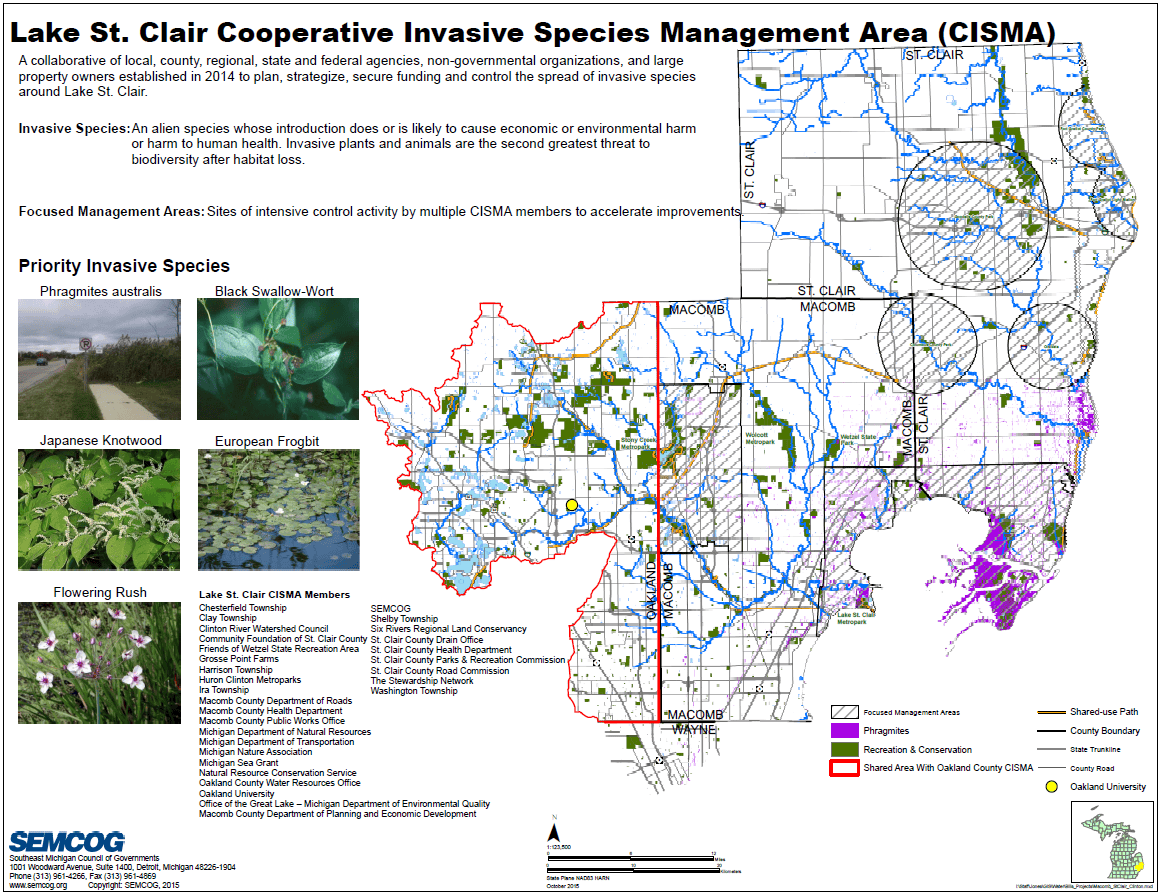
See the 2015 Management Strategy Map.
Initial control along roads focuses on eradicating small colonies that are public safety hazards (i.e., blocking sight lines at intersections, fire threat, etc.). Efforts will be targeted to areas with high ecological recreational, and tourism value, as well as primary pathways where priority invasive species spread (i.e., roads and drains).
Implementing the 2015 MISGP Grant is a springboard for building and implementing a regionwide invasive species management initiative. A broader, coordinated approach can increase future funding opportunities, promote local and regional efficiencies, and support long-term ecological restoration efforts.
In the end, working together through the Lake St. Clair CISMA restores habitat, restores and protects our priceless resources, and strengthens our region’s economy.
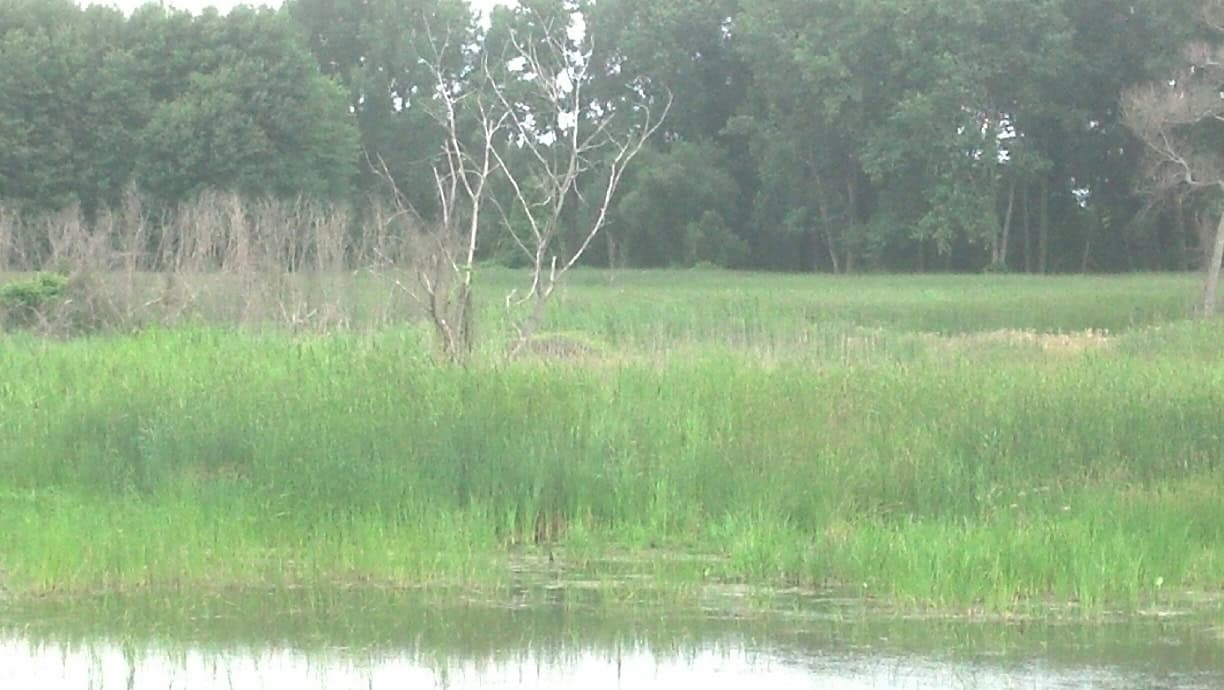
Pointe Rosa Marsh at Lake St. Clair Metropark after invasive species management efforts
Additional invasive species resources:
- www.michiganinvasives.org: Information from the Michigan Invasive Species Coalition on managing the spread of invasive species.
- Great Lakes Phragmites Collaborative: Information on controlling and eradicating Phragmites within the Great Lakes Basin.
- Midwest Invasive Species Information Network: Database for reporting sightings of invasive species in midwestern United States.
- Global Invasive Species Information Network: Platform for sharing global invasive species information.
- Invasive Species Best Management Practices: Information from the Wisconsin Council on Forestry providing best management practices for controlling the spread of invasives.
- Invasive Species Management Program: Information from the Pennsylvania Land Trust Association on minimizing the impacts of invasive species on natural lands.
- Invasive Plant Management Decision Analysis Tool: Nature Conservancy guide to help land managers identify the best management strategy for invasive plants.
To stay in the loop anytime a new SEMCOG blog is published, subscribe today on this page.
Leave a Reply