
With Career Technical Education (CTE) Month coming to a close, I want to address the notion that CTE is simply an updated term for traditional vocational education aka Voc Ed. While Voc Ed programs such as woodshop or metalwork played a part in exposing and preparing students for careers after high school, that is where the comparison ends.
CTE programs of the 21st Century are designed to respond to industry demand with appropriate rigor and relevance. Rather than pushing books to the side, academics are integrated with technical skills, industry certification or licenses, Early College, and programs that respond to high-skill, high-demand sectors.
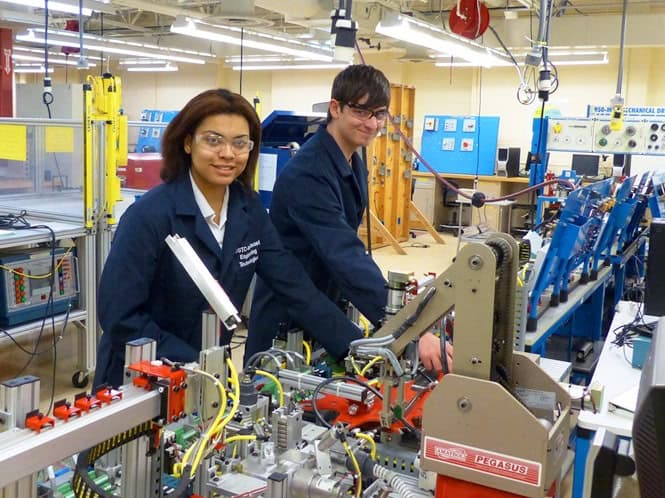
Photo courtesy of Oakland Schools
Statewide, 34% of 11th and 12th graders are enrolled in CTE programs. In Southeast Michigan, CTE is offered by more than 100 school districts. There are 16 CTE career clusters, covering a broad array of career opportunities. To name a few, they include:
- Business;
- Finance;
- Agriculture;
- Science, Technology, Engineering, and Math (STEM);
- Health care;
- Information technology; and
- Manufacturing.
To be approved by the Michigan Department of Education, each program must respond to workforce needs. Employers serve on CTE program advisory committees to strengthen the connection between education and real world application. With this ongoing relationship between education and employment, CTE career clusters can open doors to in-demand, skilled-trades positions, as well as other technical careers.
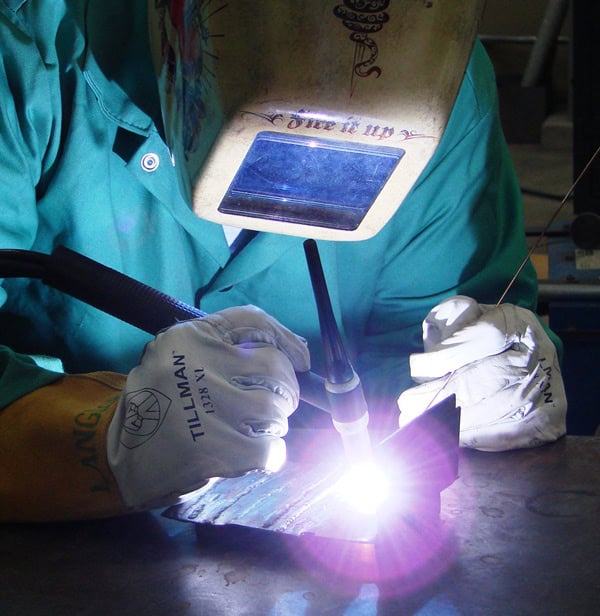
Photo courtesy of Oakland Schools
Of CTE program graduates, 75% continue their education at a two- or four-year college, which is consistent with other high school graduates. In addition, CTE students develop in-demand skills and knowledge that prepare them for success in college and after.

Photo courtesy of Oakland Schools
Voc Ed largely prepared students for entry-level jobs in industries that provided on-the-job training. While Voc Ed provided valuable trade skills for specific careers, it did not generally lead to formal post-secondary education or provide diverse career choices.
Conversely, CTE provides a foundation of knowledge and skills that are immediately viable in the workplace that create opportunities to advance through educational and career options. CTE offers more than a limited skill set for a limited job. It starts students on a path toward reaching their career goals.
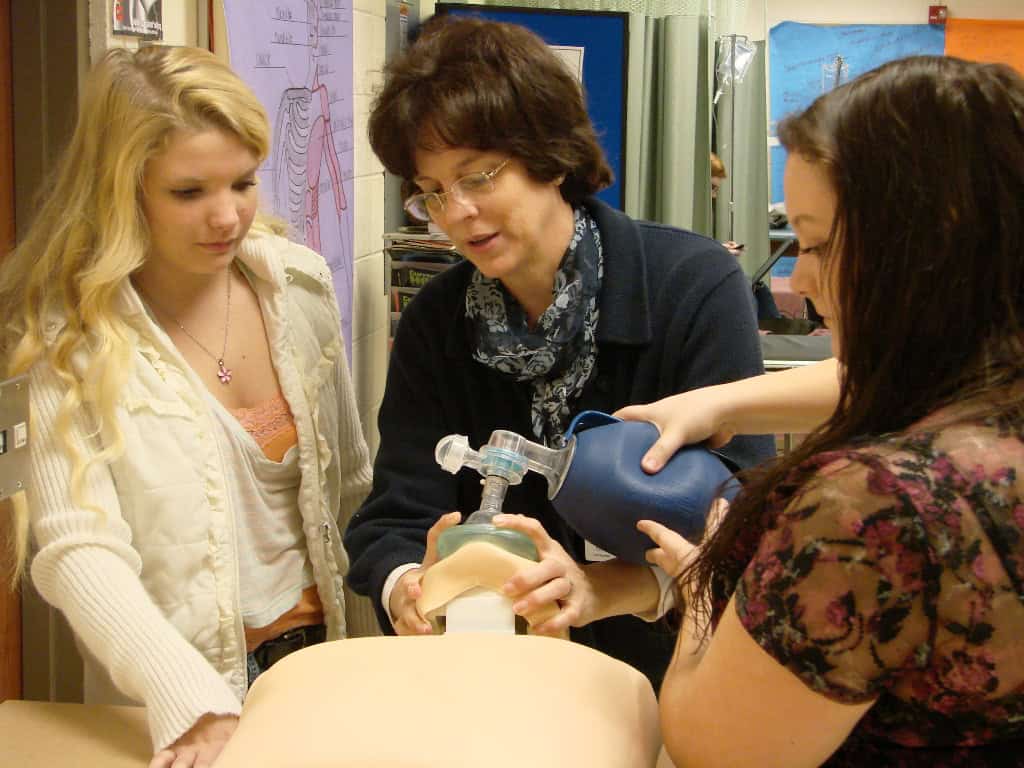
Photo courtesy of Oakland Schools
However, like Voc Ed, CTE suffers from a perception problem. Despite efforts by employers in advanced manufacturing, construction, health care, and information technology to encourage interest in these growing fields, many young people reject the opportunities provided by CTE for college and career readiness in favor of traditional college prep courses. The fear of CTE students being portrayed as not college-bound continues to be a real concern for both students and their families despite increasing evidence to the contrary.
How do we improve the perception of CTE so that more students see the advantages of being college and career ready? Some initiatives are listed below. More are needed.
- Legislation to increase flexibility in the Michigan Merit Curriculum
- Increase employer education partnerships
- Address adequate funding for CTE programs
- Increase opportunities for apprenticeships and early middle college

Photo courtesy of Oakland Schools
If you know a dependable young person who has an aptitude for technical education as well as initiative, creativity, and problem solving skills, ask them to check out any of the resources below for more information on CTE programs:
- Livingston Applied Technology Education Consortium
- Macomb Intermediate School District
- Monroe Intermediate School District
- Oakland Schools
- Wayne RESA
- Washtenaw Intermediate School District
- St. Clair County RESA
- Michigan Department of Education
Leave a Reply