
M-10 in Southfield is one of the expressways where traffic is ticking back up.
Few aspects of daily life were unaffected by the impact of COVID-19 in Southeast Michigan. In the midst of historical upheaval, SEMCOG and the Metropolitan Affairs Coalition conducted a series of forums this summer and fall to explore the pervasive impact of this pandemic on daily life. From where and how we work, to how governments operate, to regional water infrastructure, and of course healthcare services, the pandemic has touched everyone in Southeast Michigan.
Mobility has been greatly affected over the past 20 months. I have written previously about increased walking and biking as well as reduced driving in Southeast Michigan at the outset of the pandemic. Over time, more drivers are back behind the wheel.
In 2020, the number of vehicle crashes was at a decade low, but the number of deaths reached a high for the same period. Two months remain in the year, but preliminary data suggests that both of those numbers are trending up this year. According to the Michigan State Police Office of Highway Safety Planning, a crash was reported in Michigan every two minutes. While we should be mindful of everyone’s safety, there are particularly vulnerable individuals who work along our busy roadways to restore order following crashes.
Crash Responders Safety Week
This week (November 8-14) is Crash Responders Safety Week, a reminder of the importance of roadway safety for workers along Michigan roadways. Formerly called the National Traffic Incident Responder Awareness Week, Crash Responders Safety week organizers want everyone to know that it takes diligence from every responder, driver, and passenger to help save lives at the scene of a crash.
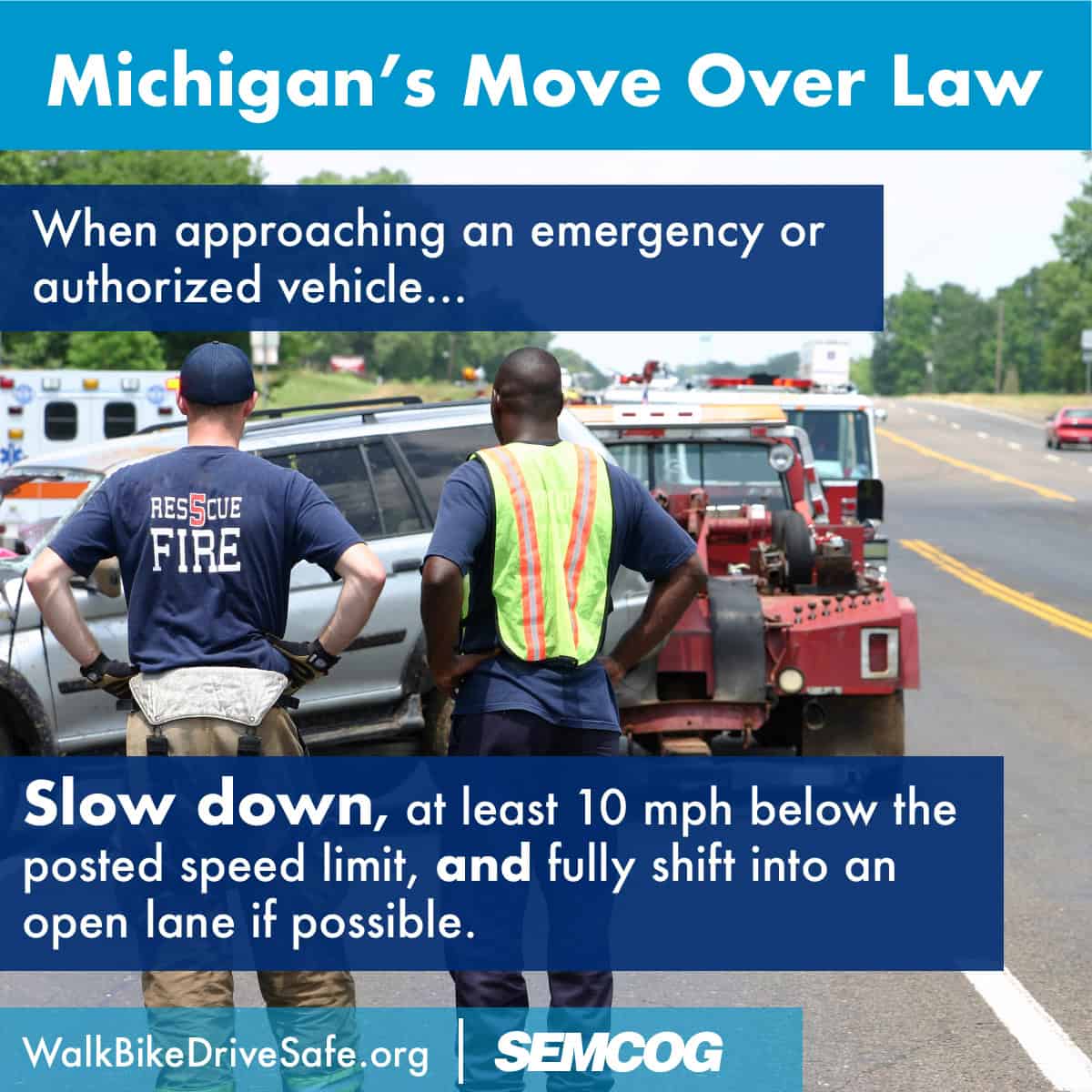
The State of Michigan’s Slow Down and Move Over law required drivers approaching stopped emergency vehicles with lights activated to slow down at least 10 miles per hour below the posted speed limit, and move over at least one lane, if safe to do so. These actions can help reduce the chances for secondary crashes and maintain safety for drivers, passengers, and workers.
An important thing to know is that drivers are required to observe the law when approaching for tow trucks, road service-, utility-, and other maintenance vehicles in addition to public safety vehicles. Drivers must also slow down and move over for freeway courtesy patrol vehicles that operate along our region’s freeways. Dennis Richards of IncidentClear, which operates MDOT’s freeway courtesy patrol program acknowledged that while there were fewer vehicles on the freeways in 2020, there was no significant dip in the number of events handled by courtesy patrol. In fact courtesy patrol was able to respond more quickly in some instances due to reduced congestion.
In 2020, there were more than 240,000 crashes, and emergency vehicles were involved in over 2,000 of those crashes. This may not sound like a large share of crashes, but it certainly is for this relatively small group of essential workers. Richards says tow trucks and roadside assistance vehicles average “four to five hits per year.” This means as workers help a stranded motorist change a tire or refill a gas tank, another driver strikes the stopped emergency vehicles. While these crashes have, thankfully, not resulted in any deaths the past two years, there have been a number of tow operators killed in Michigan in recent years. Respondersafety.com tracks crashes in which emergency responders have been killed while responding to incidents nationwide. Echoing sentiments shared by Michigan State Police, Richards opines that many drivers are increasingly becoming more distracted while driving which can result in catastrophe.
So, as we continue to return to the road with greater frequency, it is important that we remain mindful of our actions. It is up to all of us – drivers, passengers, and workers – to stay alert, avoid distraction and excessive speeds, and adhere to the Slow Down and Move Over law.
Leave a Reply