
A version of this article was originally featured in SEMCOG’s Economic Development special edition magazine: What’s Our Edge?. Contact us to request a copy. Southeast Michigan’s success depends on the unique strengths of its communities, businesses, and educational institutions. Regional cooperation, data-driven strategies, and a skilled workforce are key to driving growth. The Gordie Howe International Bridge, access to water, and education play vital roles in shaping the region’s future. By aligning these assets, the region can achieve greater prosperity, guided by the Economic Development Council’s new strategy.
SEMCOG’s economic development work is driven by the Comprehensive Economic Development Strategy (CEDS) – which we update every five years in concert with the Metropolitan Affairs Coalition (MAC). The CEDS centers on a collective vision built through a series of input sessions in each county. Our current CEDS, Increasing Shared Prosperity for a Resilient Economy: Comprehensive Economic Development Strategy for Southeast Michigan, was adopted in March 2021 and provides the roadmap for addressing regional economic issues.
To further support economic development in the region, SEMCOG was designated as an Economic Development District (EDD) by the U.S. Economic Development Administration (EDA) in 2023, joining over 400 EDDs across the nation that are focused on economic development planning and project implementation that aligns with their region’s CEDS. As part of that designation, SEMCOG formed its new Economic Development Council (EDC) in early 2024 to oversee and facilitate the development, maintenance, and implementation of the CEDS.
The Council is co-chaired by Mayor Roslyn Grafstein from the City of Madison Heights and Khalil Rahal, Director of Economic Development for DTE Energy. The Council membership features a broad representation of the economic interests of the region, including county and local government representatives, economic development agencies, educational institutions, workforce development agencies, labor organizations, employers, and other private-sector stakeholders and community-based organizations.
The EDC will provide a boost for regional economic development initiatives, as it will work to align public and private investment in the region and connect eligible local governments and higher education institutions to federal and state financial assistance programs. SEMCOG’s designation as an Economic Development District helps to make our region more competitive for EDA funding, as having an EDA-approved CEDS is a prerequisite for applying for EDA grant programs.
However, as Lee Shirey – Economic Development Representative from the EDA – told the Economic Development Council in December, “the Comprehensive Economic Development Strategy is not just specifically for getting EDA funding, other agencies use it as well [for] investments. It is an opportunity for regional partners to build a collective vision for economic prosperity and a high quality of life.”
Southeast Michigan is home to an abundance of resources that contribute to economic opportunity. These include our workforce, the built environment, the natural environment, and our educational and industrial assets – all of which are interrelated and collectively form the basis of our regional economy across three key pillars: Place, Talent, and Business. These pillars serve as the backbone of our CEDS.
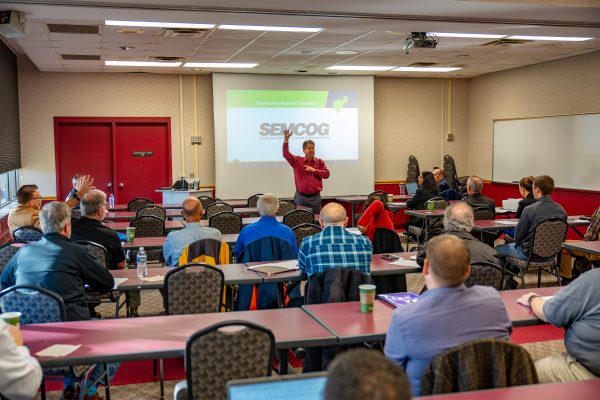
SEMCOG General Assembly Meeting | June 2024
Stakeholder Engagement and Input
In the summer of 2024, SEMCOG hosted a series of interactive forums to kick off our stakeholder engagement process for the CEDS update. The forums provided an opportunity to engage with member communities and organizations, as well as other regional partners. This coordination provides us with a better understanding of economic development challenges and opportunities, and it enables us to identify priorities related to the three pillars.
In November, SEMCOG staff had the pleasure of visiting St. Clair, Monroe, Livingston, and Washtenaw counties to solicit input on economic development priorities. The county input meetings allowed us to hear from partners working on the front lines in economic development, workforce development, K-12 and post-secondary education, planning and zoning, transportation, and parks and recreation.
Partners from the private sector also joined to provide their insight and experience, adding another key dimension to this engagement. We are grateful to have heard from a wide array of stakeholders who are working to attract and retain talent, to enhance the business climate for companies of all sizes, and to create and market great places within the region. Our regional partners have a critical role in creating a high quality of life and driving economic prosperity in Southeast Michigan.
What We’ve Heard So Far
Southeast Michigan’s Portfolio of Assets:
- Quality-of-life amenities such as the Great Lakes and natural areas that support recreational and cultural destinations
- Historic downtowns, dynamic urban centers, and diverse neighborhoods
- Accessible mobility options for people and goods
- High quality universities, colleges, and local school systems
- First-class medical facilities and healthcare choices
During the Place Forum and throughout the county input meetings, key discussions included:
- Strong desire for continued development and promotion of our parks, trails, and outdoor resources
- Main streets and downtowns – strong downtowns help bolster the rest of the community and help attract people
- Need for more affordable, desirable, and diverse housing and neighborhood options across Southeast Michigan
- The importance of improving and expanding transit and mobility options to support workers, businesses, and enhancing regional connections
- Engaging the public to promote housing and business developments to increase jobs and economic opportunities
- Promoting the link between quality places, creating a strong business climate, and attracting and retaining talent
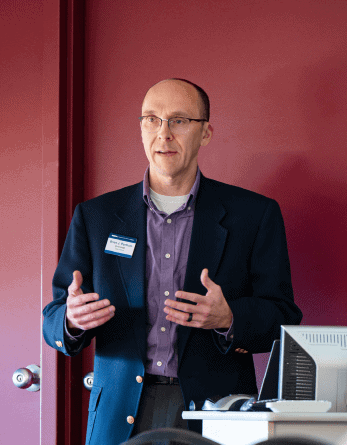
Brian Parthum, Economist, SEMCOG Data Analysis, speaks at the Monroe County Economic Development Input Meeting
At the Talent Forum and throughout the county input meetings, key discussions included:
- The high priority on developing, attracting, and retaining high skilled talent to align with employer demand across the region
- Addressing barriers to workforce participation – childcare, elder care, transportation, and housing issues – with strong, comprehensive wraparound services
- Southeast Michigan’s declining prime-age labor force (ages 25-54) and shortage of skilled trade workers, including an overall feeling that the way skilled trades careers are promoted needs to change
- The need for long-term sustainable funding for existing and new apprenticeship and employerled training programs
- The importance of affordable, flexible, and convenient access to education across the region, along with making sure that K-12 students and adults are aware of these educational options
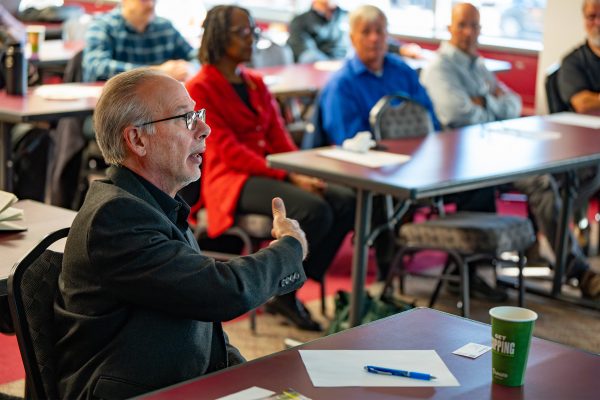
Attendees discuss challenges and opportunities at the Monroe County Economic Development Input Meeting Monroe County Community College | November 13, 2024
Lastly, a successful regional economy fosters business growth in a way that enhances community vitality; creates jobs; retains vital industries, helping them transition to the changing marketplace; and welcomes new businesses and entrepreneurs by equipping them with the resources and capital they need to be successful. A strong business climate creates an environment that is conducive to business growth and job creation.
During the Business Forum and throughout the county input meetings, key discussions included:
- Access to capital is a huge challenge for entrepreneurs, micro-businesses, and startups, making It difficult for small businesses to get financing at reasonable terms
- The need to streamline and better communicate local permitting process, which could be better understood by business owners
- The need to find sustainable sources of funding to support businesses as many COVID era programs are ending
- A strong and growing regional entrepreneurial ecosystem, but one that loses growing businesses due to a lack of the talent required to succeed in newer industries
- Infrastructure demand/capacity challenges, which can limit growth for new or growing companies
What’s Next
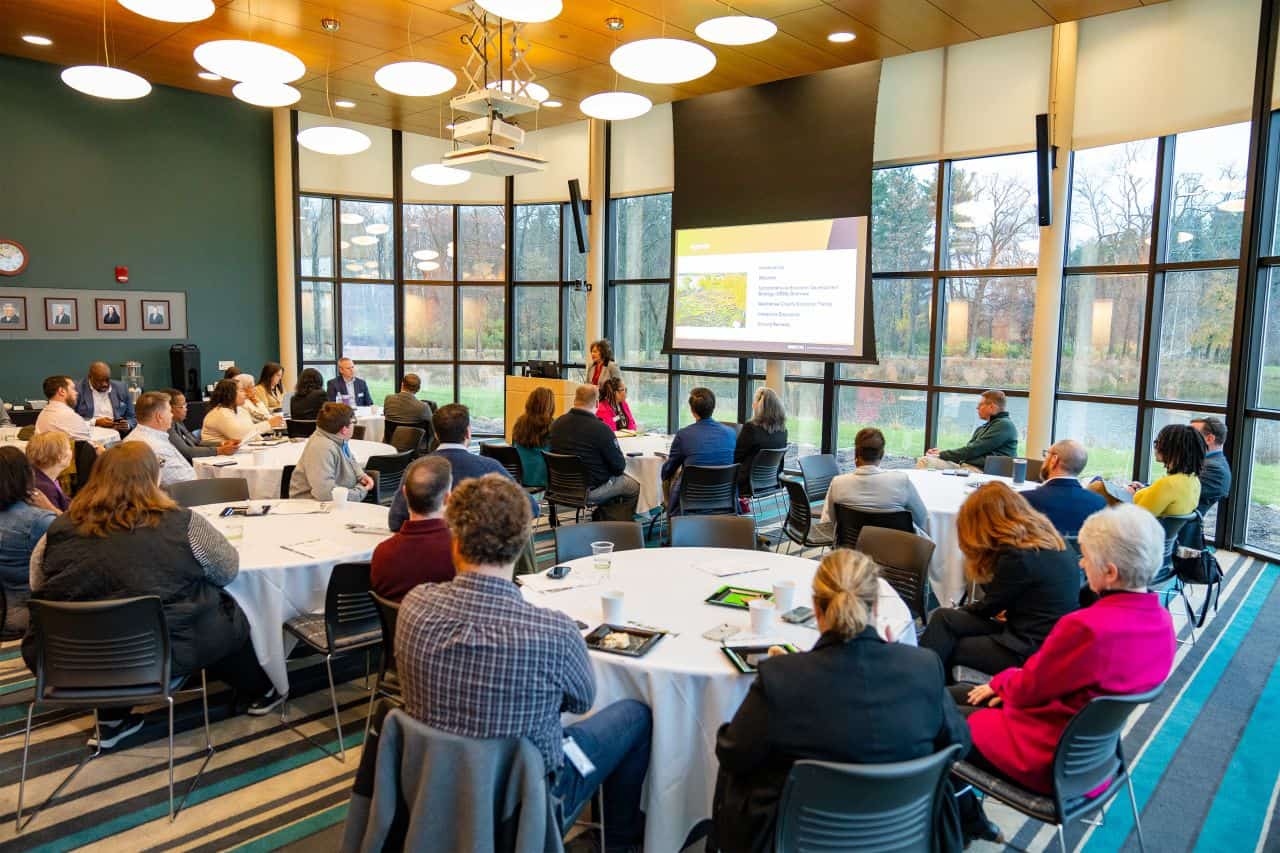
Dr. Rose Bellanca, President of Washtenaw Community College, delivers her welcoming remarks at the Washtenaw County Economic Development Input Meeting Washtenaw Community College | November 22, 2024
SEMCOG continues to analyze the input from the summer forums and the county input meetings. We have also been having conversations with our regional economic development partners in one-on-one meetings to learn about specific needs and priorities when it comes to economic development, workforce development, and placemaking. The Economic Development Council meets quarterly and will work with SEMCOG staff to develop new recommendations and strategies that will go into the region’s next CEDS, which is anticipated to be adopted by the SEMCOG Executive Committee in February 2026 and the General Assembly in March.
Leave a Reply