
Efficient, sustainable, and inclusive transportation systems has never been more critical to success. The transportation needs for Southeast Michigan are rapidly changing, and SEMCOG is working on Vision 2050, the Regional Transportation Plan (RTP) for Southeast Michigan, to update investment priorities that will lead to a more connected future.
What is Vision 2050?
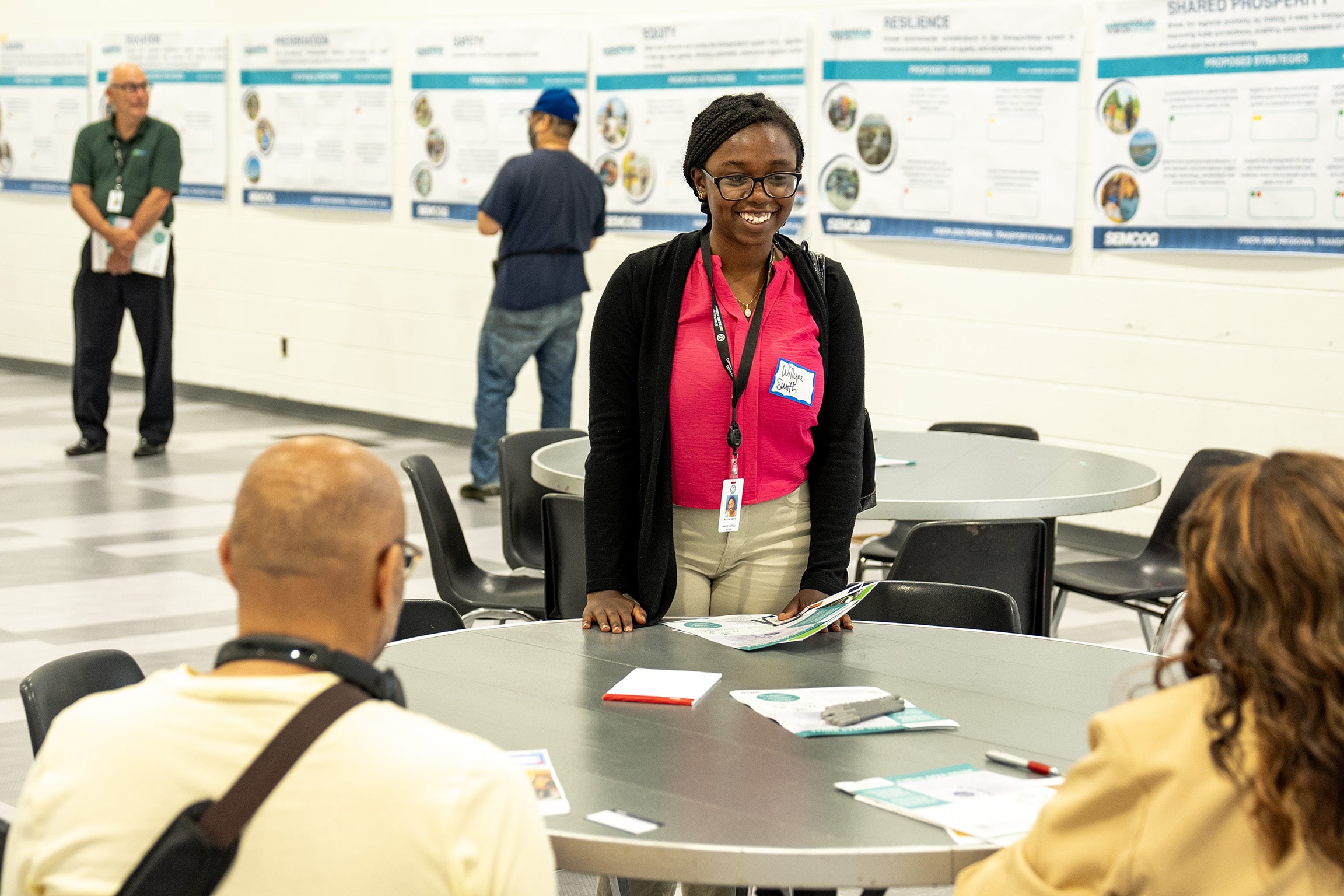
Vision 2050 is an update to the Regional Transportation Plan, in which investment priorities are set to effectively use transportation funding for Southeast Michigan. Updating an RTP requires data collection/analysis, input-gathering from stakeholders and the public, and collaboration with regional transportation agencies to develop projects to address transportation needs and challenges in the system. To keep pace with evolving transportation needs over time, the RTP is updated every four years.
Visioning and Goals Meetings
Recently, SEMCOG held a series of open house meetings to gather input and ideas about draft goals that will be used to help prioritize transportation investments. The open house meetings were held throughout the SEMCOG region, including the City of Detroit, Troy, Commerce Township, and Riverview. Additionally, a virtual option was made available to accommodate a broader audience.
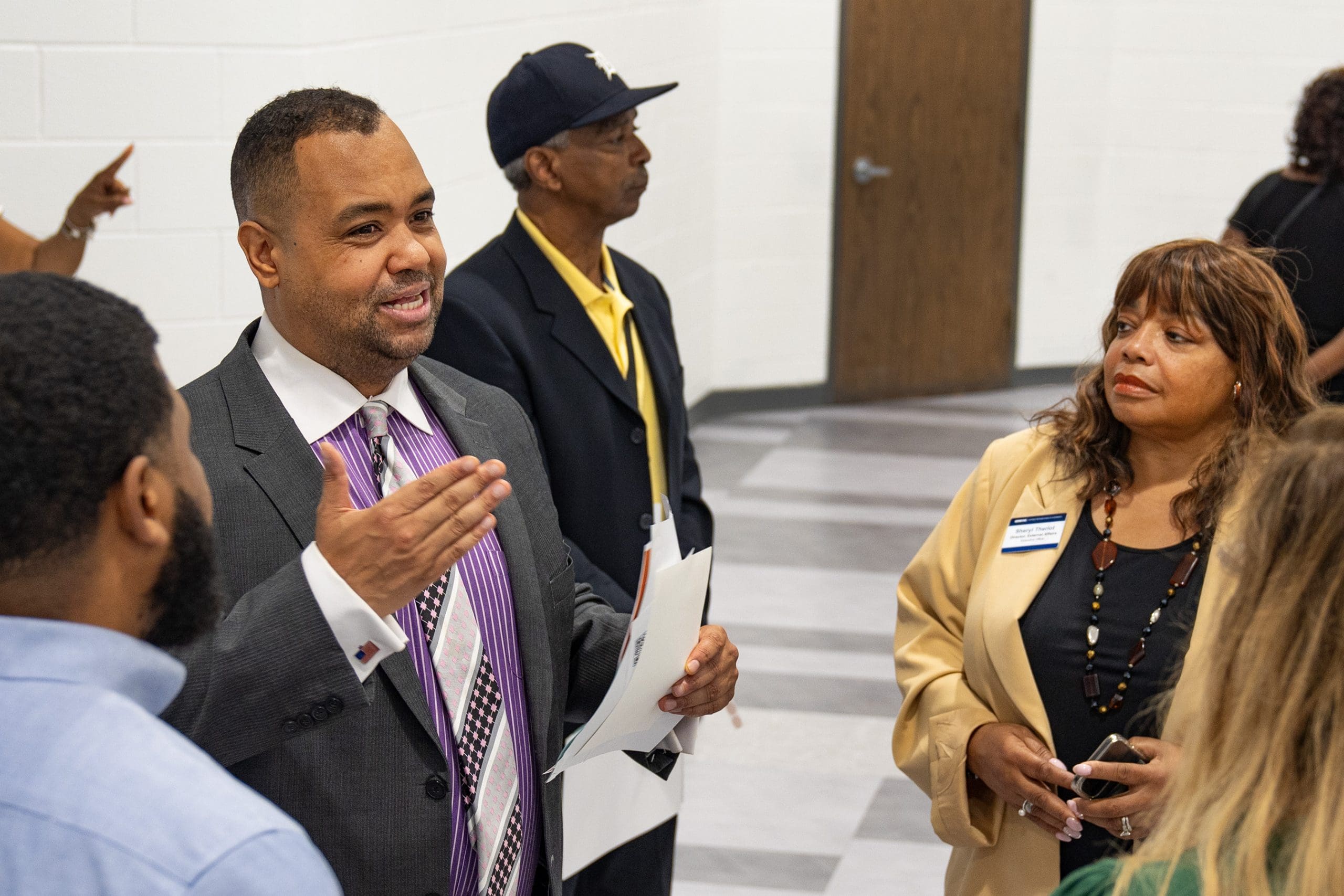
During these interactive open houses, participants first gained a shared understanding of the process by watching a video outline of the RTP process.
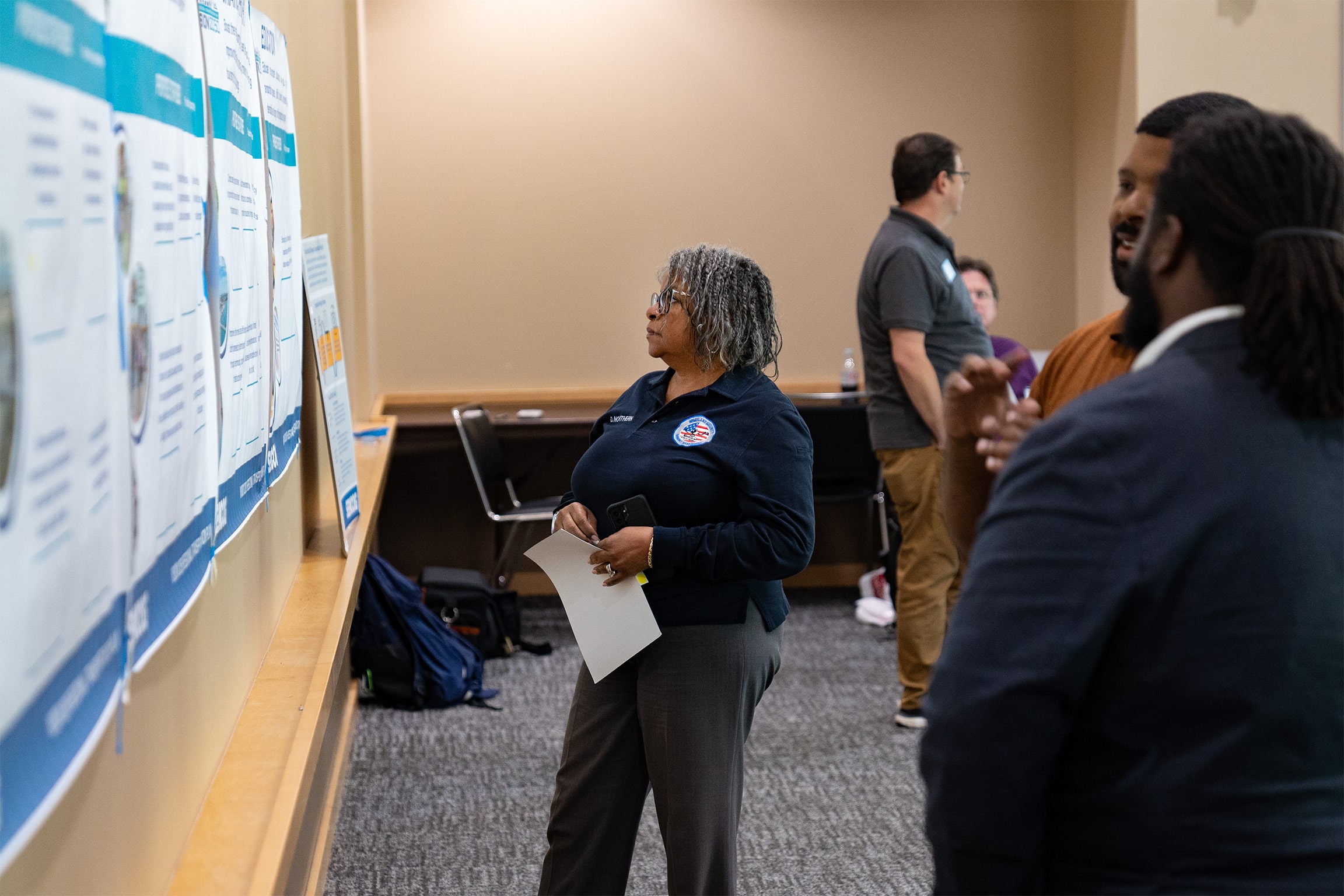
Participants then brought this knowledge, along with their own perspectives, to provide feedback on a series of display boards with draft goals and strategies being developed for the RTP. Participants were given stickers to indicate which strategies were most important to achieving regional transportation goals. Participants also completed forms to share additional comments about transportation goals and strategies.
Draft regional goals included:
- Preservation – Use asset management practices, technology, and cost-effective transportation solutions to preserve infrastructure.
- Safety – Increase safety for all travelers, regardless of mode.
- Equity – Ensure equitable access regardless of age, race, gender, ethnicity, national origin, age, physical or cognitive ability, or income.
- Resilience – Integrate environmental protection into the transportation system to improve community health and infrastructure resilience.
- Shared Prosperity – Promote a thriving regional economy by facilitating seamless movement of goods, efficient trade connections, enhancing labor mobility, and fostering tourism and local placemaking.
- Education – Educate and foster collaboration among local governments, transportation agencies, utility providers, and residents to enhance knowledge about and efficiency of the transportation system.
- Local Options – Increase funding and broaden local options to ensure adequate resources and coordination for meeting regional transportation needs to achieve fiscal sustainability.
At these workshops, participants shared valuable insights and desires for the future transportation system. Key themes emerged, including a strong call for enhanced transit services and availability throughout the entire region, a need for better infrastructure supporting non-motorized activities to reduce reliance on personal vehicles, and an emphasis on improving education regarding available or planned transportation resources. These discussions showcased the collective vision for a more interconnected and accessible transportation network in Southeast Michigan.
Vision 2050 Survey Now Open
Even though the open houses are over, Vision 2050 development continues. A survey is now open for anyone to give their preferences on transportation issues. In the survey, participants will be able to directly show how they prefer to budget funds for transportation infrastructure, as well as, how satisfied they are with current conditions on the transportation system. We invite anyone and everyone to take the survey and hope that it is shared with all in Southeast Michigan.
In addition to the survey, comments can also be sent directly to the RTP development team by emailing RTPoutreach@semcog.org.
Vision 2050 is poised to help shape the future of Southeast Michigan’s transportation system by laying the foundation for a transportation network that meets the needs of all its residents. Through collaboration and community engagement, SEMCOG helping the region embark on a journey towards a more connected and sustainable future.
For more information about the regional transportation plan, please visit the Vision 2050 hub.
Leave a Reply