
Southeast Michigan is home to a variety of great communities – urban and rural, large and small, landlocked and coastal. That variety is what makes our region special. Each community has its own unique character, sense of place, and civic pride. Rural communities often provide diverse landscapes filled with a strong sense of community and connectedness. They also have unique priorities and face varying challenges when it comes to economic development, placemaking, infrastructure maintenance, public safety, staffing, and capacity to both pursue and administer grant programs.
To facilitate inter-community conversations on common issues and opportunities, SEMCOG kicked off its new Peer Group Committees in March. These groups share the goal of encouraging collaborative planning efforts to develop local strategies, build strengths, and address challenges. Peer groups are also meant to ensure the needs and challenges of all member types are heard and recognized in regional planning and initiatives. The five peer groups include Urban Communities, Suburban Communities, Small Communities, Rural Communities, and Education Organizations.
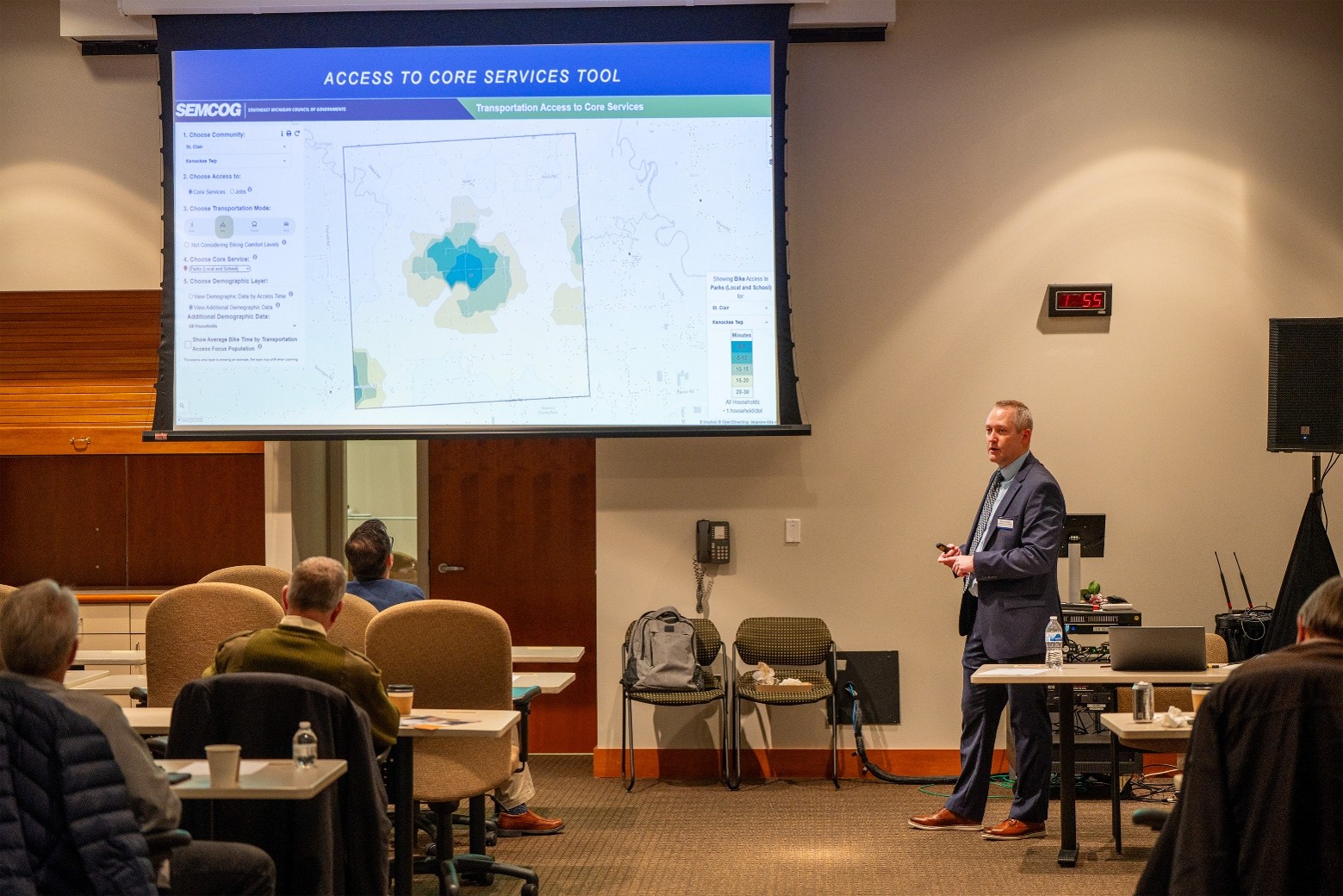
The first Rural Communities Peer Group meeting included an open discussion about the priority issues and challenges rural communities throughout the region are facing, including:
- Data center challenges, concerns, zoning guidance, and public engagement
- Housing preemption legislation
- Stormwater management and the protection of waterways
- Managing growth in rural areas
- Historic dams
- Transportation – particularly gravel road maintenance
- Parks and recreation planning and maintenance
Other entities in the region are also focusing on rural placemaking, community development, and agricultural sustainability.
Focusing on Rural and Small Towns in St. Clair County
On May 19, the Community Foundation of St. Clair County held a Rural and Small Town Summit, which drew about 60 local leaders and funding partners from 20 communities across St. Clair County. The purpose of the Summit was to identify the most important priorities facing rural and small-town communities and better understand the readiness and capacity needs of municipalities in the county. Importantly, it provided an opportunity for community leaders to discuss shared challenges, identify local assets, and assess resource and capacity gaps. Readiness and capacity were central themes of the day, as rural and small communities often lack the staff and resources needed to identify funding opportunities, prepare strong grant applications, or manage grants if they are awarded. The term ‘readiness’ refers to the level of preparation a community has to pursue funding opportunities or implement projects – primarily by having modern, up-to-date master plans, recreation plans, capital improvement programs, and ordinances.
The Community Foundation’s work with rural and small towns began in 2022. The foundation worked with communities to develop applications for the MDNR Spark program. That effort, along with ongoing project coaching and technical assistance, helped build a cohort of eleven communities that were ready to pursue a variety of outdoor recreation projects. The Foundation develops a strategic focus every three years to guide their work and investments. Two continued and current areas of strategic focus include expanding rural philanthropy and supporting countywide placemaking. Those focus areas have been impactful.
Looking into the Numbers
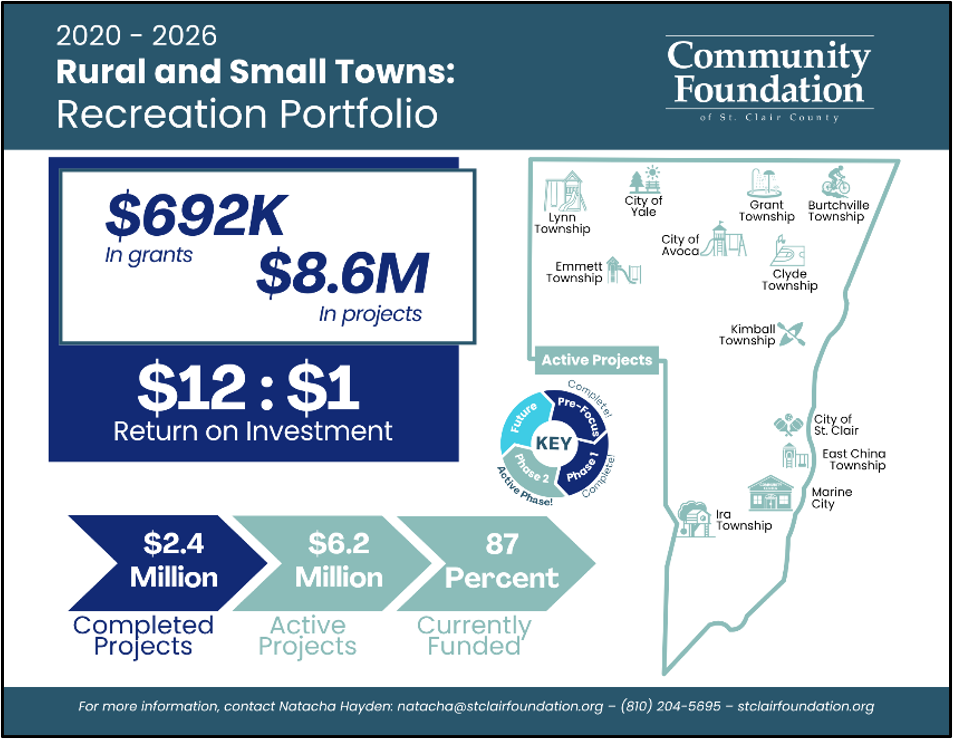
Zooming in on recreation investments, the foundation has leveraged $692,000 in grants to help support $8.6 million in projects – an impressive $12:$1 return on investment. In 2026, Emmett Township, Ira Township, and Grant Township all received grants through the MDNR Recreation Passport program, while the City of Yale and Kimball Township are currently awaiting the Michigan Natural Resources Trust Fund decision. Since 2020, $2.4 million in projects in outdoor recreation and $22 million in placemaking projects have been completed countywide.
During the Summit, community leaders had the opportunity to join small group discussions focused on outdoor recreation, public gathering spaces, leadership and volunteering, entrepreneurship and economic development, brownfield redevelopment, family support, and zoning. Within each breakout discussion, conversations centered on why that topic is important, what assets currently exist in that space, and what resource or capacity gaps must be addressed.
“Our role isn’t to tell our local communities what to do or build or invest in; it’s to help them be ready for the opportunities they choose to pursue. By helping them build readiness, connect with expertise, and navigate funding opportunities, it turns into completed projects – it strengthens the long-term vibrancy and prosperity of our entire Thumb Coast region,” said Jackie Hanton, Vice President of the Community Foundation of St. Clair County.

Following the Summit, the Community Foundation plans to provide connections to subject matter experts and resources and tools for each community, all based on discussion feedback and localized need. They have since formed a small countywide collaborative around the four priority areas identified to help inform the next steps for connecting communities to resources, tools, and learning opportunities while helping the Foundation stay connected.
Rural Communities Peer Group
Meeting on July 29 in Huron Township
The next Rural Communities Peer Group meeting will be held at the Huron Township Senior Barn at 28341 Mineral Springs Road, New Boston, MI, 48164 from 2 – 4 p.m. on July 29, 2026. The meeting will include ample time for leaders and staff from rural communities to talk about community priorities and challenges and will include a discussion about SEMCOG’s next legislative policy platform. We hope to see you there!
Next Rural Peer Group Meeting
Leave a Reply