
In planning for the future success of Southeast Michigan and considering its challenges, we often hear about labor shortages, the skills gap, disconnected workers, lack of career counselors, and abundant vacant skilled trade jobs.
These are all related to the Talent Development System, the system made up of three primary components – employers, education, and workforce development. This system also includes other stakeholders who educate, train, and employ people for career and life success.
When the system is aligned, education and workforce partners prepare people with the skills they need to successfully navigate both the job market and life’s challenges.
However, we are facing a period of disruption caused by three defining challenges that require a different way of addressing talent development:
- Technological advances
- Demographic and social changes
- Business trends
In Southeast Michigan, new technologies in the workplace include Artificial Intelligence, 3D printing, and virtual reality. These are transforming industries such as manufacturing, retail, and healthcare while dramatically changing others. The greatest challenge is the speed of change.
Demographic changes, specifically the dramatic aging of the population, will lead to a declining labor force and also result in four different generations in the workforce. Each has specific working styles, needs, and priorities, which creates both opportunities and challenges. Millennials are the largest and fastest-growing group.
Businesses are responding to changing technology, limited labor force availability, and customer preferences by increasing automation and updating hiring and training practices. As these dynamic trends continue to progress along their own tracks, keeping these separate areas of talent development coordinated and in sync is a real challenge.
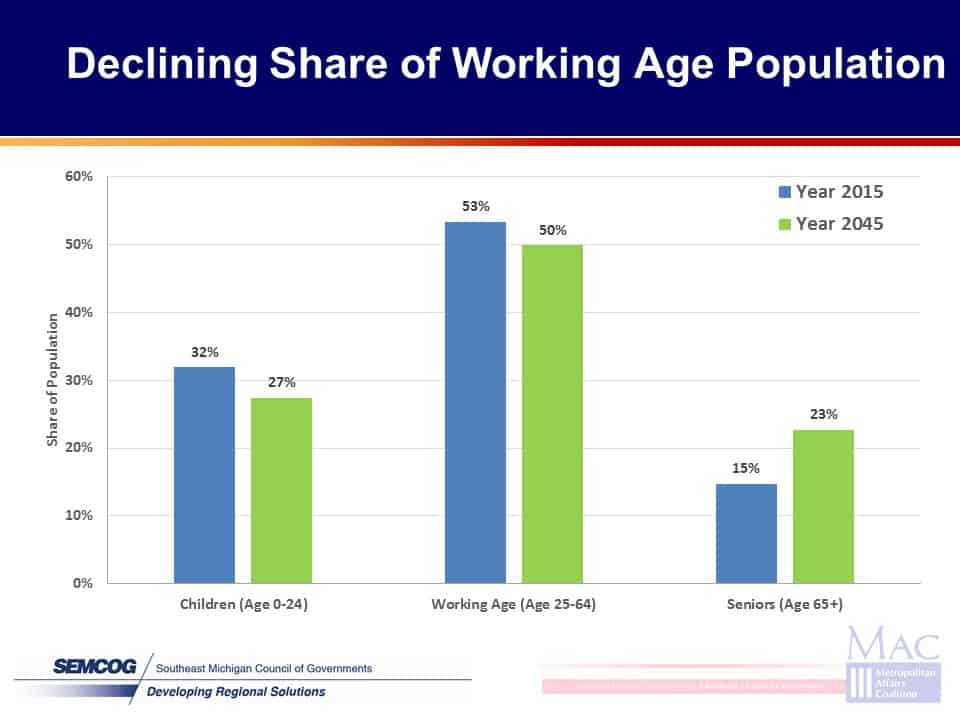
Southeast Michigan’s declining traditional working age population
So what needs to happen to bring the region’s Talent Development System back into alignment?
SEMCOG and our partner, the Metropolitan Affairs Coalition (MAC), recently completed work on Future Skills with the help of others who make up Southeast Michigan’s Talent Development System. The Future Skills Task Force identified changing talent needs, heard from partners on innovative approaches to talent development, collected student and public input, and developed recommendations and actions to create a stronger system.
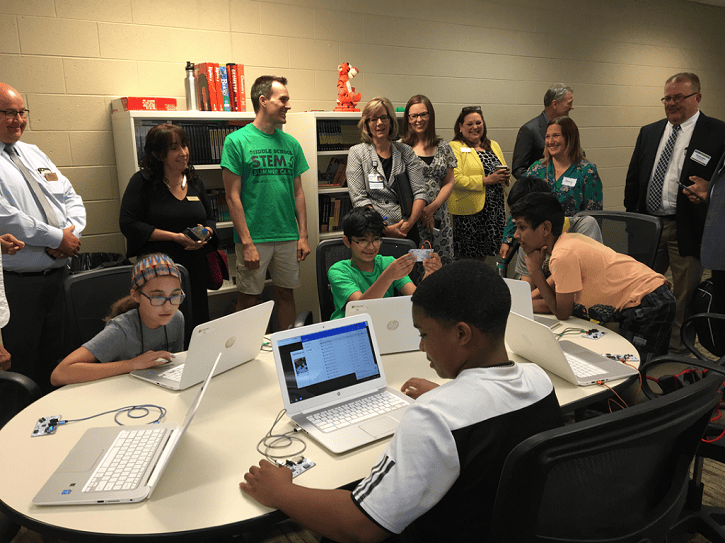
Visiting Oakland Schools Middle School STEM camp
The final report provides an analysis of the changes, policy recommendations, action steps, and case studies that reflect some of the excellent work already being done in the area of talent development. We need to build awareness of these programs, and replicate and scale them so more people can benefit.
We had active participation from business, education – including K12, community colleges, and four-year colleges, as well as workforce development providers such as Michigan Works – the public workforce system; nonprofits that are providing work readiness and technical skills training; and labor organizations that are at the forefront of training through the apprenticeship model. In addition, we had representatives from the Michigan Department of Education and the Michigan Department of Talent and Economic Development, as well as local governments. Nancy Susick, Senior Vice-President of Beaumont Health and Diana McKnight-Morton, Trustee for the Washtenaw Community College Board of Trustees, provided strong leadership as our co-chairs, representing business and education, respectively. A full list of participants is included in the report.
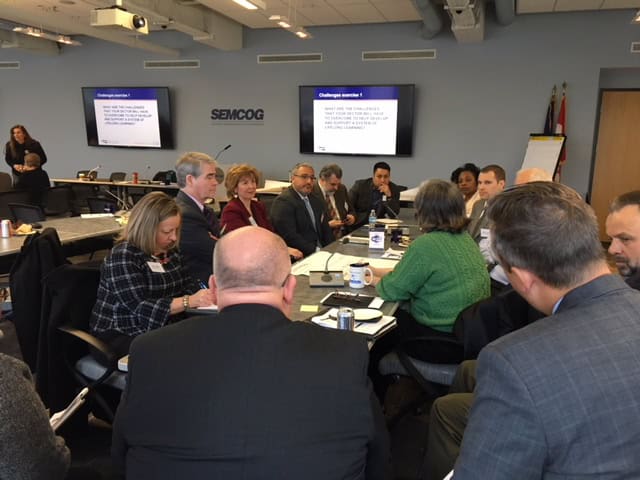
Talent Development System stakeholders developing policies
This is the overarching recommendation of the task force:
“Transform the Talent Development System in Southeast Michigan by building on established talent assets, and partnering with education, employers, workforce development and government to develop, implement and evaluate strategies that support individual success and regional economic growth.”
We developed four broad recommendations and 32 actions that build on existing work and cross-sector partnerships and also meet the challenges that we know about, and those that are still to come:
- Create and promote a framework for Lifelong Learning
- Build support for multiple career pathways
- Promote collaboration between employers, education and workforce development AND
- Increase labor force participation by expanding the number of qualified workers
We will be reporting on the recommendations and implementation over the next few months. If you have any questions or want to be involved in these efforts, please contact me.
We look forward to your participation in addressing these challenges to ensure that Southeast Michigan continues to be a leader in talent development and economic prosperity.
Leave a Reply