
In case you missed it, SEMCOG just released a Notice of Funding for the Transportation Alternatives Program (TAP). Each year, SEMCOG allocates funding for transformative community projects that increase walkability, bikeability, and water quality. This new TAP video helps explain our program and eligible projects.
Over the last few months, there has been progress on many impressive TAP projects. Five projects come to mind that fulfill both local and regional goals. These goals may include implementing regional corridors, providing access to core services, increasing pedestrian and bicycle safety, or enhancing water quality. These projects also feature creative partnerships with many organizations, both in coordination and in funding resources. My hope is that these recent regional success stories inspire you to think about how TAP funding and SEMOCG technical assistance can help implement your community’s goals and projects.
Further Activating Detroit’s Riverfront
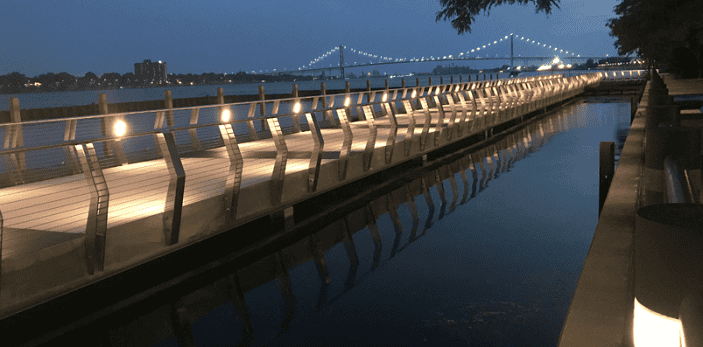
One nearly complete project is the newest extension of Detroit’s RiverWalk, which extends across the Riverfront Towers property (just west of the former Joe Louis Arena site), filling a crucial gap between the eastern riverfront and Ralph C. Wilson, Jr. Centennial Park. Project designers thought outside the box to find a win-win situation that provides greater riverfront connectivity without drastically impacting residents of Riverfront Towers. The result is a public connection that extends out into the water, keeping the public away from the towers’ private plaza space, while creating a new and unique experience for RiverWalk patrons. Funding for this new section – like others – has involved multiple partners. In this case, SEMCOG and MDOT leveraged TAP funds to complement resources from the Michigan Natural Resources Trust Fund, the Detroit Riverfront Conservancy, Ralph Wilson Foundation, and others.
Connecting communities
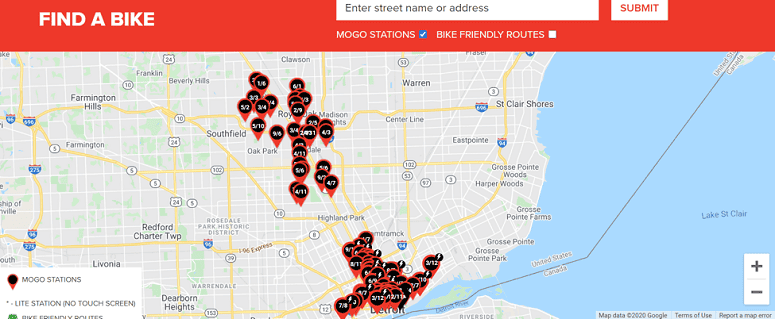
In southeast Oakland County and northern Detroit, MOGO – the public bike share – launched an expansion. that brings over 140 bikes (both conventional and e-bikes) to five new communities via 31 new stations. Residents and visitors will be able to use the bikes on miles of new biking infrastructure such as the brand new Livernois Avenue Complete Street in Detroit, the recently completed bike lanes on Nine Mile in Oak Park, and the upcoming cycle track on Woodward Avenue in Pleasant Ridge. This expansion was made possible by a funding partnership between SEMCOG (TAP), MOGO sponsors, and six communities (Berkley, Detroit, Ferndale, Huntington Woods, Oak Park, and Royal Oak). Ongoing operation costs are funded via fares and local company sponsors.

Overcoming barriers with data
In the City of Ann Arbor, SEMCOG and MDOT TAP funds were used in combination with FEMA and local funding to build a new grade-separated bicycle and pedestrian crossing of an Amtrack railine. This location has been a hotspot for pedestrian safety issues, where many people find it necessary to illegally cross the railroad tracks to connect to the Border-to-Border Trail and Ann Arbor’s Main Street district. Past SEMCOG technical assistance and counts showed more than 150 people making this crossing on a typical summer day.
Per the city (via Facebook), a monumental effort took place in May when:
Work on the Allen Creek Railroad Berm project reached an exciting milestone on May 12. During a 37-hour period, a cooperative effort by Amtrak and contractors removed the railroad tracks, excavated the site, placed 20 pre-cast concrete culvert sections, backfilled the excavation, and replaced the track. This around-the-clock work was completed in time for the Chicago train’s evening arrival.
The following video shows this impressive feat, creating both needed bicycle and pedestrian connections and better flood mitigation for the greater downtown area.
Partnerships literally build bridges
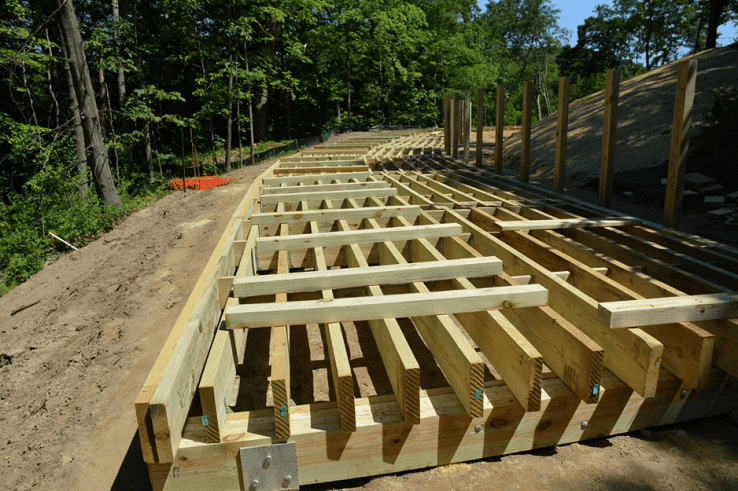
Another successful project that helps implement the Iron Belle Trail is the Clarkston Road pathway. Earlier this month, a bridge over the Paint Creek connected the Paint Creek Trail with the Clarkston Road pathway. Once complete, bicyclists and pedestrians will have uninterrupted access to the Polly Ann Trail, Paint Creek Trail, and Clinton River Trail systems. This project is possible through a funding partnership between SEMOCG and MDOT TAP, the Michigan DNR, and Orion Township.

Traffic management, water quality, and aesthetics come together
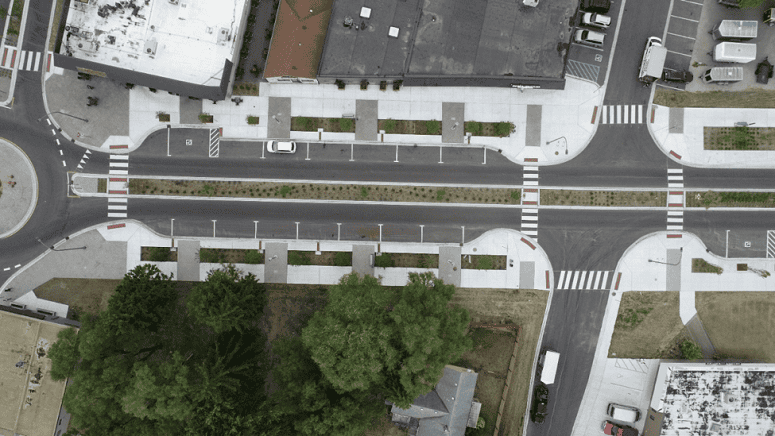
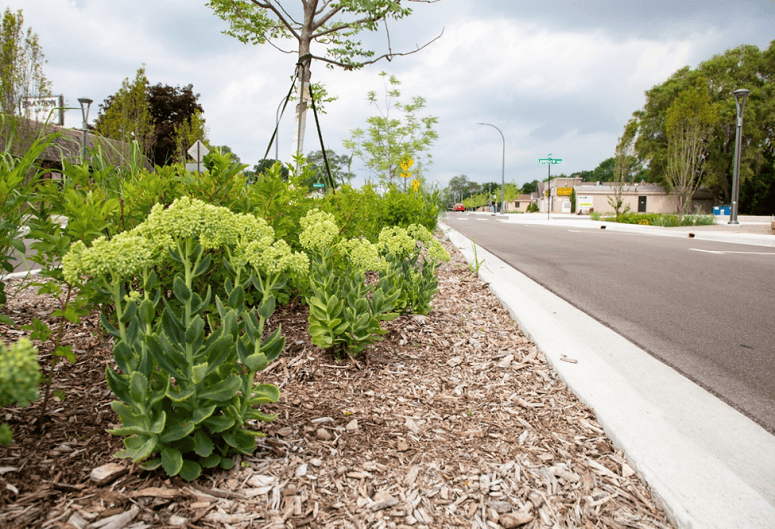
Last, but certainly not least, is a streetscape project on Auburn Road in Rochester Hills. This project involves access management, traffic calming, pedestrian safety, and green infrastructure. It was coordinated with a road reconstruction project to install roundabouts, medians, enhanced sidewalks, pedestrian refuge islands, and other improvements. The city applied for and received an EPA Green Infrastructure grant through SEMCOG to install rain gardens within the streetscape to manage stormwater runoff. The result is a total road corridor transformation.

Before
After

Tip of the iceberg
There are so many other successful and inspirational TAP-related projects that you can learn about via SEMCOG’s TAP Story map.
If you are inspired by any of them and want to learn more about TAP funding, check out our TAP webpage. Furthermore, feel free to reach out to me to talk specifically about your ideas. Hopefully, we’ll be sharing your TAP success story in the near future!
Leave a Reply