
A key component of the narrative included in Michigan House Bills 5529–5531 and 5581–5585 is that local zoning ordinances and planning practices are central to housing supply and affordability issues in our state. Another implication is that by simply proposing state mandates to zoning, Michigan’s housing woes will be solved. These assumptions are both not true and severely disingenuous to the dedication and years of progress communities across the state have made.
While the proposed bills focus on building more housing, they do not include any policy or language on what would make this housing more affordable or attainable. Conversely, local governments have been addressing affordability and doing so in collaborative, creative ways that reflect their community – including both current and future residents.
Following are just a few examples of how local governments are addressing the need for housing, particularly affordable housing through local processes that include resident input, elected representative deliberation, and purposeful location in areas that can support new development with underground infrastructure including water and sewer, access to schools and core services, and transportation and public transit availability.
Pittsfield Township
In 2019, Pittsfield Township initiated the use of Payment-in-Lieu of Taxes (PILOT) to accomplish two things:
- Recapture taxes from tax exempt housing projects that convert to market rate and donating the proceeds to affordable housing programs
- Use PILOT Agreements to incentivize the construction of new projects to accommodate low-income families
Since its PILOT inception, the Township has approved two projects with nearly 450 new dwellings and recaptured taxes for use for other affordable housing initiatives from a third project.
Most recently, the township completed Haverhill on Clark apartment development. It has 295 units with rent restrictions to qualifying residents with below-average incomes. The complex features a mix of one- to three-bedroom apartments serving households at or below 40% to 60% of Washtenaw County’s area median income. The location of this development was prioritized because of its proximity to jobs and public transportation, as well as Ann Arbor Public Schools.
The understanding that location is critical to where affordable housing should be located is sorely absent from the State’s proposal. For any affordable housing development to be successful, the surrounding amenities, services, and infrastructure must be considered. Otherwise, the added expenses of transportation costs, reliance on a personal vehicle, and challenges in reaching vital destinations can outweigh the reduced costs for housing.
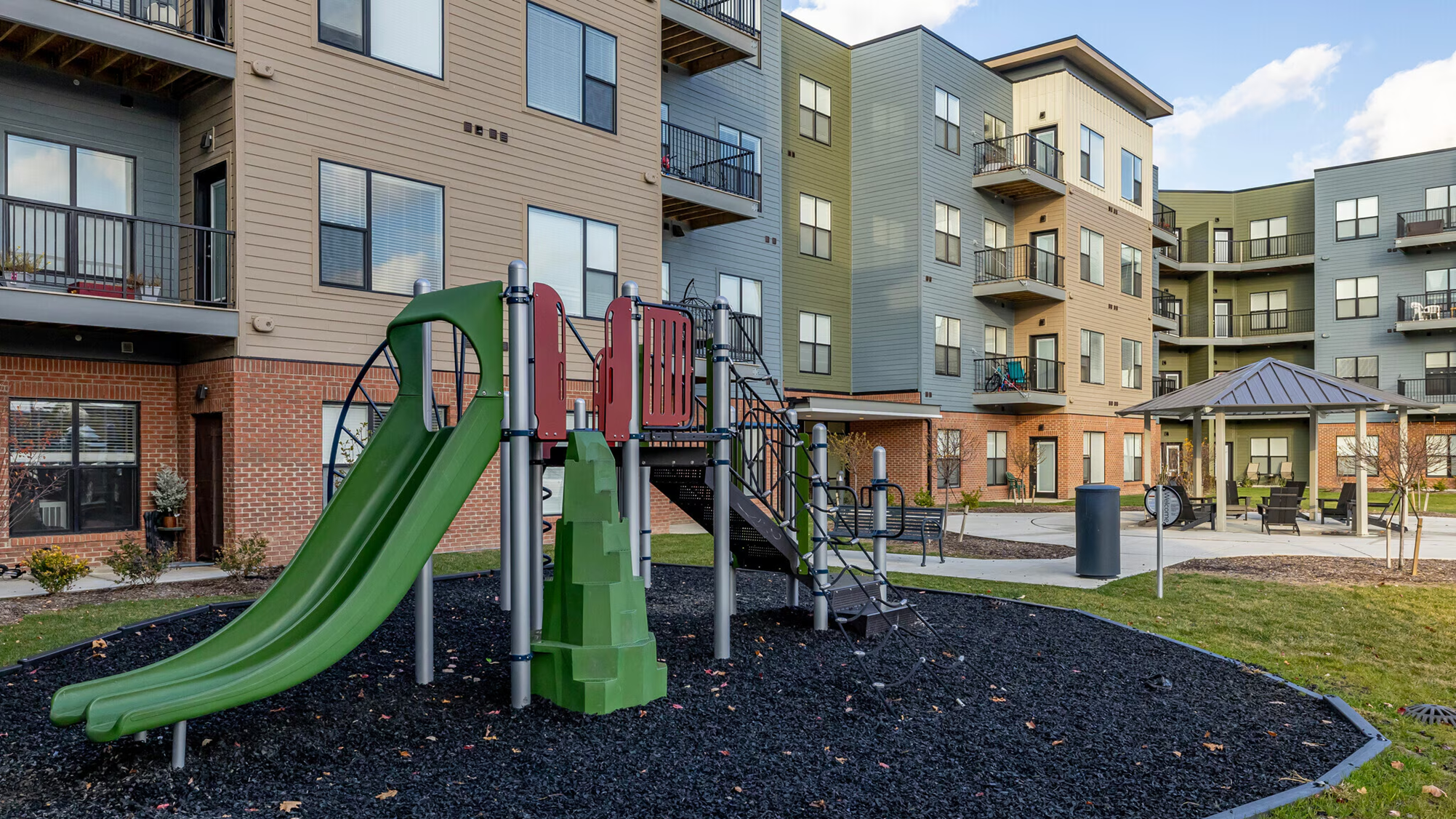
image from Haverhill on Clark
City of Harper Woods
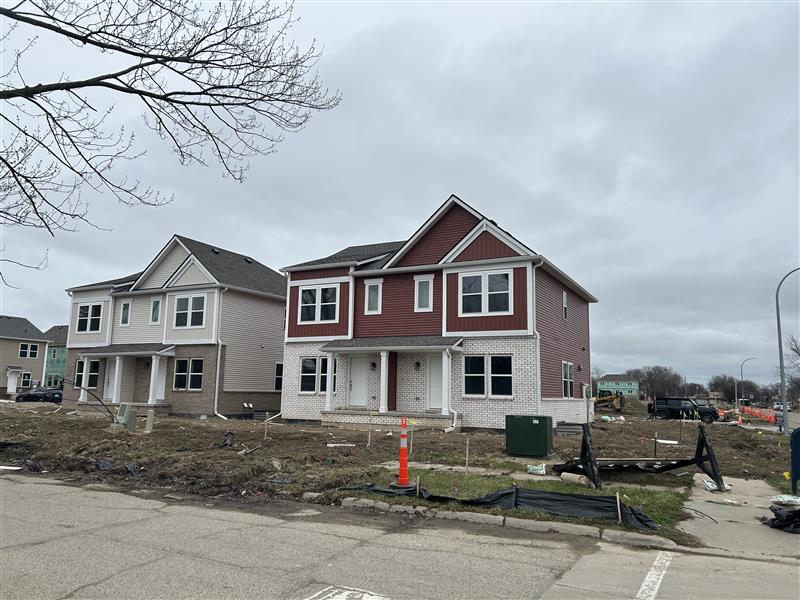
The City of Harper Woods’ new Fraser Square will create 71 new homes, many priced for families earning 60-120% of the Area’s Median Income (AMI). This is the single largest new development in Harper Woods in many decades. Fraser Square includes 48 duplexes and 23 townhomes; 13 units will be priced at market rate, with typical prices in the mid-$200,000s. Most will be sold below the cost of construction and will include downpayment assistance for qualified and priority buyers (early access to teachers, first responders, and city employees).
Fraser Square is proof that when local zoning ordinances are respected, communities can build housing that is both affordable and rooted in the unique character of their community. Conditions that make this possible include:
- The community (Harper Woods) has the power to shape its own future
- State resources support rather than override local processes and understanding of needs
The partners in this project included private developers, the Michigan State Housing Development Authority, the local school system, and city officials—all working together to achieve a common goal of more affordable housing in the community.
Ypsilanti Township
Post 2012, housing foreclosures and non-payment of taxes were rampant. When Washtenaw County put foreclosed homes up for sale, organizations such as Habitat for Humanity found themselves competing with landlords, restricting their ability to return such homes to owner occupancy.
Recognizing the problem, Ypsilanti Township adopted a neighborhood stabilization policy that gave them first right of refusal over the purchase of tax-foreclosed homes. Since the inception of the program, the township has sold over 232 homes with 32 more in process to Habitat for Humanity for just the fees it has incurred.
The success of the program has not only provided home ownership to many who could not otherwise afford it but has contributed to the stabilization of many neighborhoods.
The township has also partnered with Habitat for Humanity to rehabilitate with critical repairs and weatherization of over 1,700 housing units for low-income residents. Due to the concentration of these units in several specific areas, the housing rehab program has also been combined with other neighborhood improvement programs. The Township has also used PILOT to assist in the development of multiple-family units for seniors.
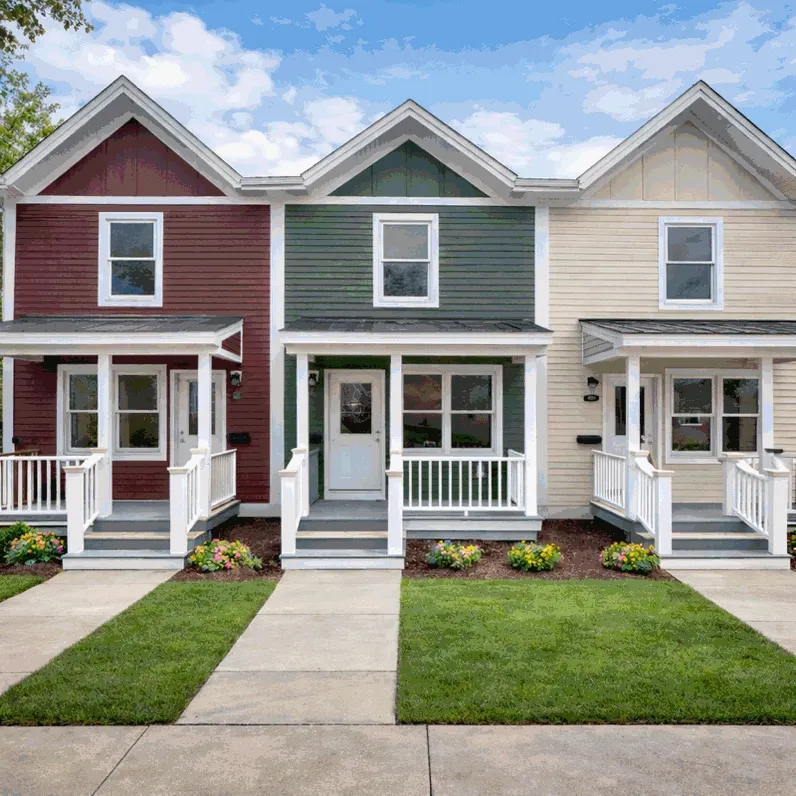
image from Dorsey Estates
City of Pontiac
In 2023, the City of Pontiac adopted the Residential Infill Overlay District to allow for diversity in housing stock and promote redevelopment of dated housing or vacant lots in certain single-family neighborhoods.
The Overlay District permits the construction of both two-family and smaller one-family dwellings by right, subject to compliance with certain design standards intended to promote compatibility with existing homes in the neighborhood.
This initiative directly supports the City’s “100 Homes for Pontiac,” which aims to build 100 houses across the city reserved for homebuyers making 120% of the AMI or less. The Pontiac Housing Commission recently finished construction on the first home at the corner of Motor Street and Wilson Avenue.
The commission will provide homebuyer education classes for prospective residents and offer them a variety of mortgage options from lenders who will provide downpayment assistance under their federal Community Reinvestment Act requirements. A goal of this program is to provide an opportunity for people seeking to transition from Section 8 housing to home ownership, and for people who work in Pontiac but can’t afford a home there.
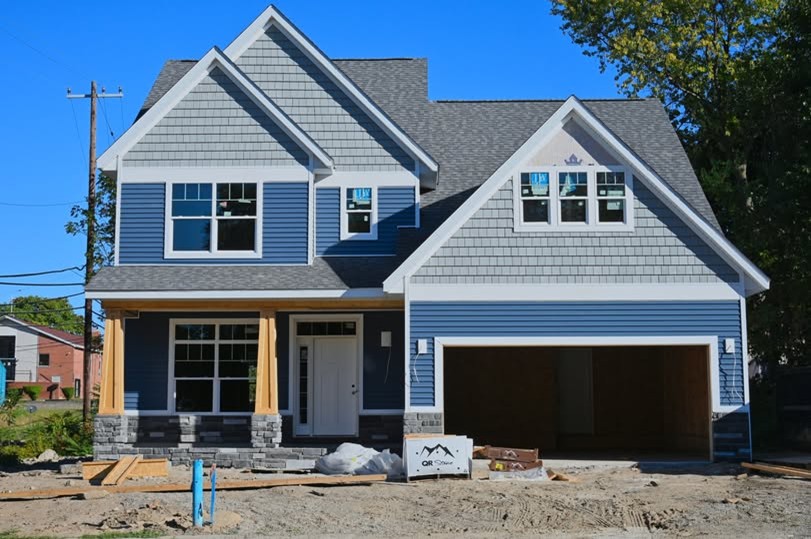
image from pontiachousingmi.com
City of Ypsilanti
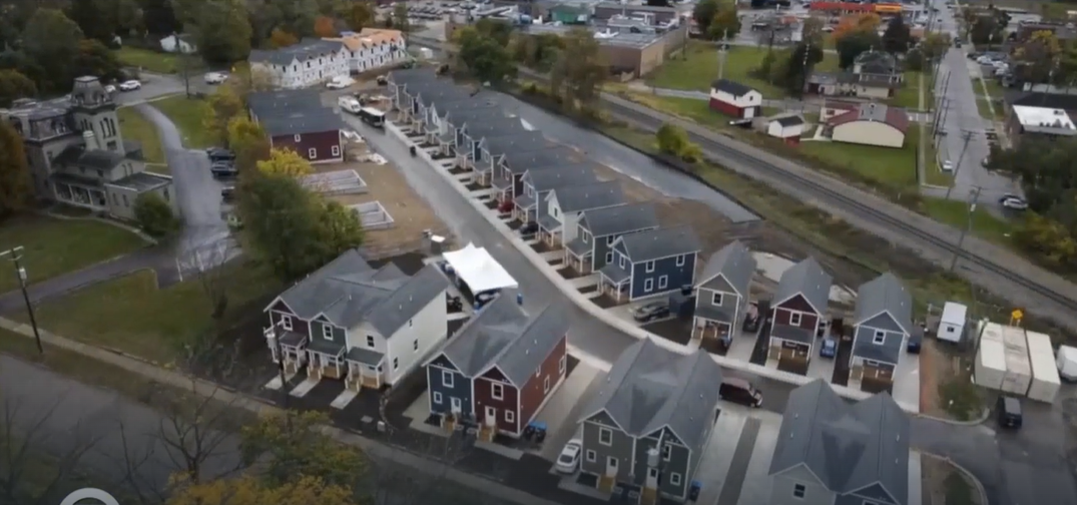
The City of Ypsilanti’s Dorsey Estates transformed a former brownfield site into 46 brand new homes. Because of resident concerns about building homes on previously contaminated land, the city and developer conducted multiple public sessions educating the public and potential homeowners of the site’s history, before any resident signed purchase agreements. Over multiple years, Renovare Development remediated and tested every single lot, achieving what’s called a “no further action” status — the highest residential criteria for environmental safety.
To keep the homes affordable and available to the most residents, a lottery system was established which allowed residents to purchase homes at 40% of the area’s median income. One half of all homes are listed at this rate. This is a true public-private partnership, in which the city prioritized this specific site to be developed as affordable housing, and ultimately sold the land to developers for $1.
City of Dexter
The City of Dexter has done several things to address housing:
- The city has allowed duplexes in single family districts since 1996 and ADUs since 2021.
- Its zoning ordinance was amended in 2023 to reduce the minimum lot size to 4500 sq. ft. and lot width 49.5’ in the central core of the city.
- Side yard requirements were reduced to 5’ for a single side and 15’ total.
- Parking was reduced to one space per dwelling unit.
- Additional amendments allowed for single family, duplexes and mixed-use with residential and multiple family buildings in the Downtown.
- City-owned property was sold below market rate to Avalon Housing to construct a 24-unit affordable apartment housing development for families and veterans.
City of Howell
The city has used Payment-in-Lieu of Taxes (PILOT) to allow for the rehabilitation of Country Glen Apartments, a low-income senior housing apartment complex. The rehabilitation project will allow for affordable rents, 35 housing units, to be maintained, avoiding the conversion of the development to market rate.
City of Berkley
In 2025, the City of Berkley adopted Ordinance amendments that decreased the number of single family districts from 4 to 2, allowed ADUs in residential districts subject to design standards, allowed multiple family development in commercial corridors where such use had not previously been permitted, reduced the minimum dwelling unit size, reduced parking requirements for multi-family, and added a height bonus for affordable housing.
Moving forward together
Communities in Southeast Michigan are eager to increase access to affordable housing. They are also committed to developing in ways that are consistent with community needs and resources. These examples illustrate that the State has willing partners in its goal, and we look forward to working together on solutions that create what we all want: attainable and affordable housing that helps to build prosperity in our region. What communities in Southeast Michigan do not want or need is development with no planning or community input that threatens to cripple local infrastructure and/or create public safety challenges.
View SEMCOG’s Engagement Toolkit for Local Leaders: Housing
Research and local example data compiled by Carlisle Wortman Associates, planning, code enforcement and municipal consultants, Ann Arbor, MI.
2 responses to “How Local Governments in Southeast Michigan are Addressing Affordable Housing”
Posted by semcog.org
Thank you for the comment. We appreciate your thoughts and opinion.
Posted on April 20, 2026 at 5:19 pm
Posted by Jaiver
Shouldn’t we encourage all of these communities to at least do what Berkley and Dexter have done rather than simply try to subsidize housing? The Michigan House Bills 5529–5531 and 5581–5585 all look like good ideas to me and should be implemented state wide. If an individual city wants to take it further, they’re welcome to.
I don’t see why we should subsidize housing development when these bills would at least get the boot off the neck of the market to be able to do more to build. Besides, it isn’t as if these get passed and moments later every community is going to have a massive influx. It will be gentle infill.
Posted on April 18, 2026 at 6:33 am