
Continuing our 30-year engagement on cross-border transportation, SEMCOG hosted a joint meeting of the U.S./Canada Transportation Border Working Group (TBWG) and the Eastern Border Transportation Coalition (EBTC) over May 6 and 7.
Intro
SEMCOG recently had the opportunity to host a two-day gathering of the U.S./Canada Transportation Border Working Group (TBWG). TBWG is co-led by USDOT-Federal Highway Administration and Transport Canada. The Eastern Border Transportation Coalition (EBTC) is led by the states and corresponding Canadian provinces from Michigan to Maine.
This annual gathering brought together the Eastern Border Transportation Coalition and the U.S./Canada Transportation Border Working Group to facilitate the safe, secure, efficient, and environmentally responsible movement of people and goods across the 5,525-mile U.S.-Canada border.
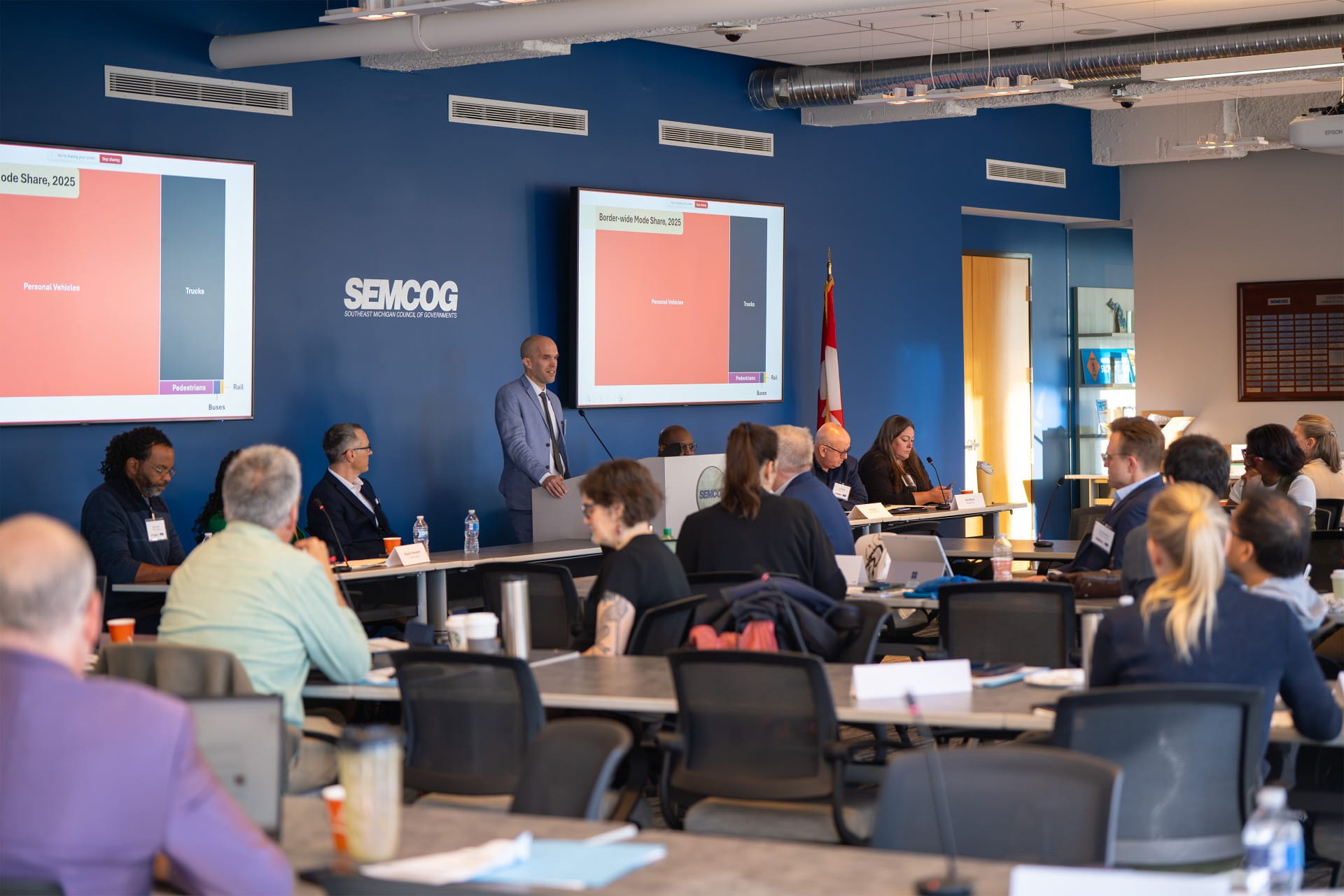
Carson Poe, USDOT-Office of the Secretary
Convening these groups provides a valuable opportunity to meet with a diverse group of partners from both sides of the border, exchange information, and strengthen cross-border coordination and collaboration.
This two-day workshop featured presentations on several topics of national interest, including cross-border passenger and freight rail, bridge and tunnel project updates (Gordie Howe International Bridge, Detroit Windsor Tunnel, Michigan Central Station), border wait-time technologies, Great Lakes marine freight, and local/regional program updates.
TBWG’s members include federal, state, and provincial departments/ministries of transportation from both sides of the border, U.S. Customs and Border Protection, and the Canada Border Services Agency. Additional participants include Global Affairs Canada, the U.S. Department of State, bridge and tunnel operators, and other partners, including regional cross-border planning organizations such as SEMCOG.
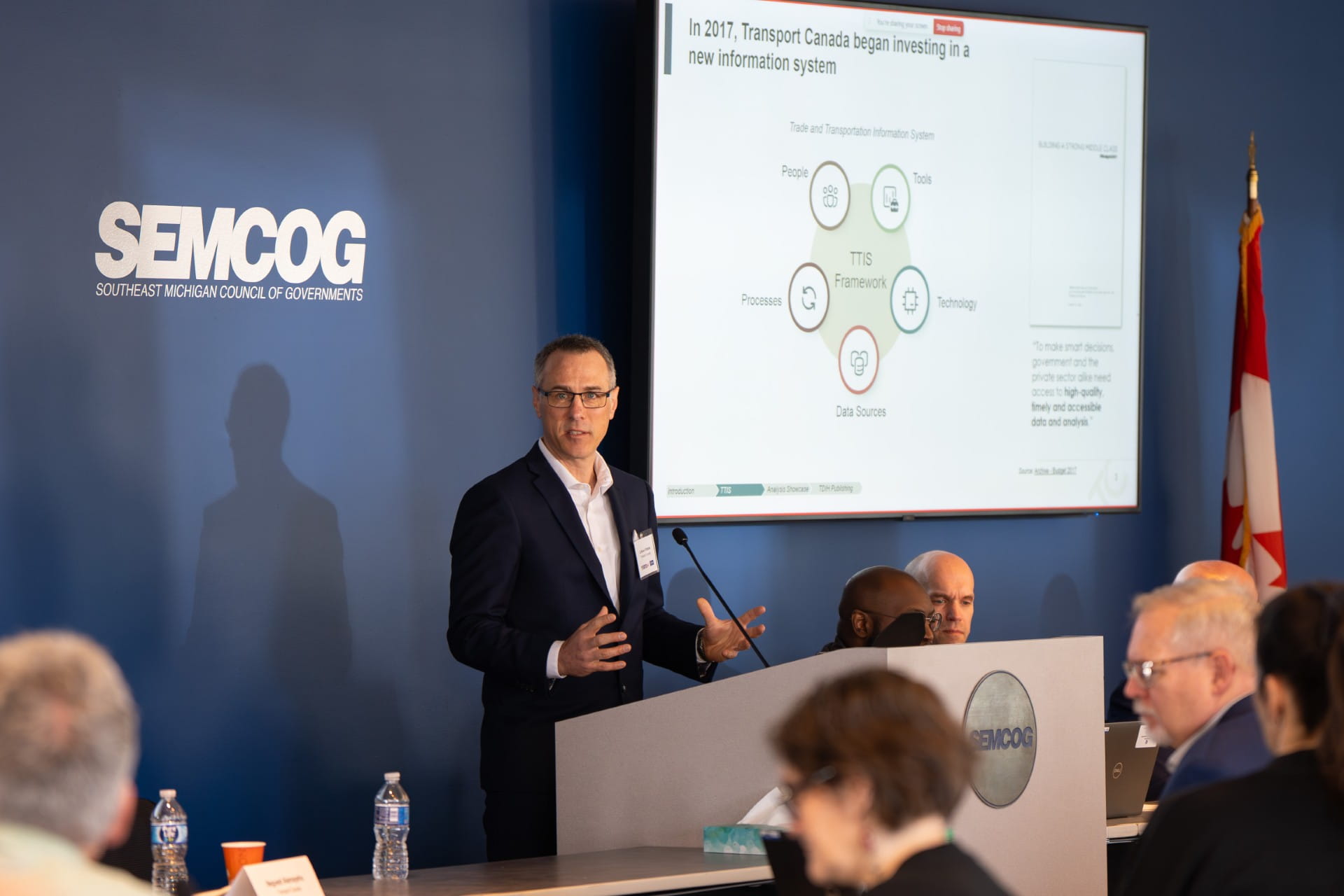
Lindsay Robles, Director of the Canadian Centre on Transportation Data, Transport Canada
EBTC membership includes four U.S. states (Michigan, New York, Vermont, and Maine) and four Canadian provinces (Ontario, Quebec, New Brunswick, and Nova Scotia).
| US Representatives and Participants | Canada Representatives and Participants |
| USDOT-Federal Highway Administration | Transport Canada |
| USDOT-Federal Railroad Administration | Canada Border Services Agency |
| USDOT-Office of the Secretary | City of Windsor |
| U.S. General Services Administration | Chamber of Marine Commerce |
| U.S. Customs and Border Protection | Federal Bridge Corporation Limited |
| USDOT-Great Lakes St. Lawrence Seaway Development Corporation | |
| USDOT-Bureau of Transportation Statistics | Detroit-Windsor Tunnel |
| Michigan Department of Transportation | New Brunswick Department of Transportation |
| Vermont Agency of Transportation | Global Affairs Canada |
| SEMCOG | Windsor Detroit Bridge Authority |
| City of Detroit | University of Windsor Cross Border Institute |
| Michigan Central Station | Public Safety Canada |
| New York State Department of Transportation | Billy Bishop Toronto City Airport |
| Texas A&M Transportation Institute | CPKC |
| Johns Hopkins University School of Advanced International Studies | VIA Rail |
| Amtrak | ALTO |
Economy and International Trade
The border crossings in our region are key arteries of the transportation network linking both freight and passenger movement between the U.S. and Canada. There is significant interdependency between the American and Canadian economies, and there is nothing more important to exporters and importers on both sides of the border than being able to ensure traffic at the border flows efficiently and the international supply chain remains strong.
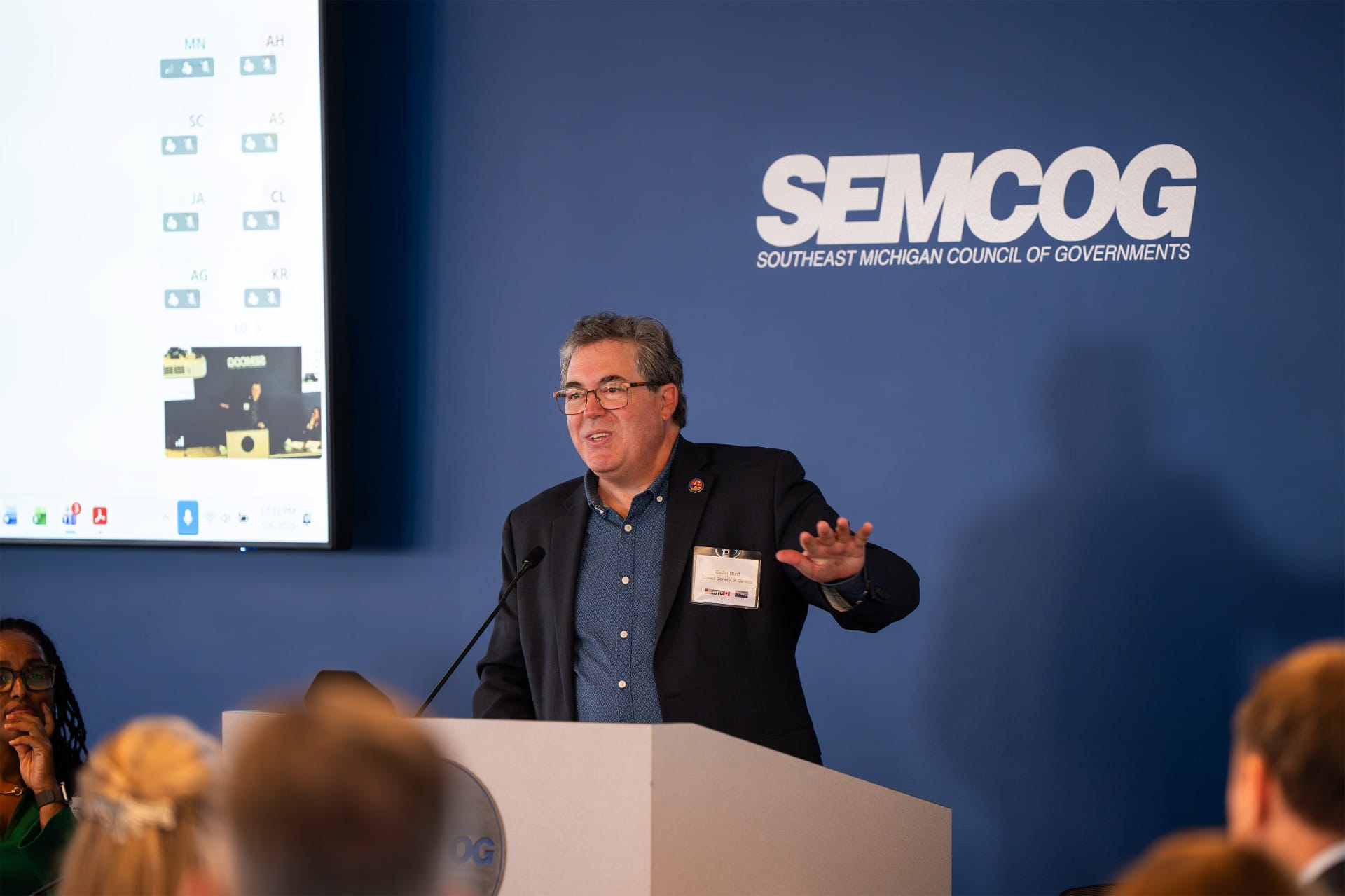
Colin Bird, Consul General of Canada in Detroit
Social connections are equally important, with people crossing the border visiting friends and family, staying overnight, shopping, attending sporting events and concerts, and other activities that also generate positive economic impacts.
Our geographical position and existing transportation network form an integral gateway to Canada, the Great Lakes/St. Lawrence Seaway, Chicago, the Midwest, Mexico, and the world.
Southeast Michigan’s border crossing infrastructure:
- 87-mile shared border with Southwest Ontario
- 6* international border crossings (*Soon to be 7 international crossings with the opening of the Gordie Howe International Bridge)
- 3 auto/truck crossings
- 2 international rail crossings
- 1 ferry service
- 7 marine ports and 29 commercial marine terminals with access to the Great Lakes/St. Lawrence Seaway
Although the SEMCOG region covers seven counties in Southeast Michigan, we are part of an interconnected trade corridor that links both freight and passenger movement between the U.S. and Canada. To a large degree, Southeast Michigan and Southwest Ontario function as one economic and social region, with each border crossing playing a vital, complementary role.
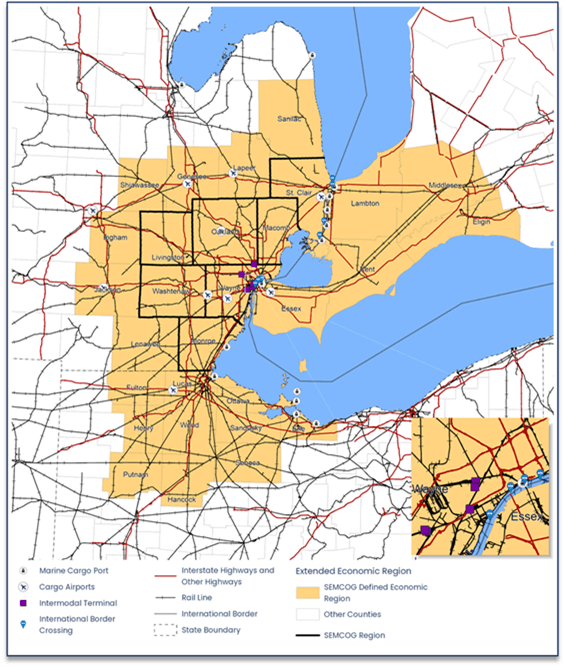
Having efficient and resilient border crossings is vital to the economic and social relationship between the two countries, and this infrastructure is critical to extensive trade relations. The automotive manufacturing industry (still the prevailing sector of our region) has created interwoven supply chains and close trade ties with Canada.
- Nationally, 36% of U.S.-Canada border trade crosses through Southeast Michigan ports of entry.
- Approximately $250 billion in trade value annually at Detroit/Port Huron border crossings.
- Approximately 6,000 workers cross between Windsor and Detroit every day to work on the other side of the border.
Resiliency and Redundance
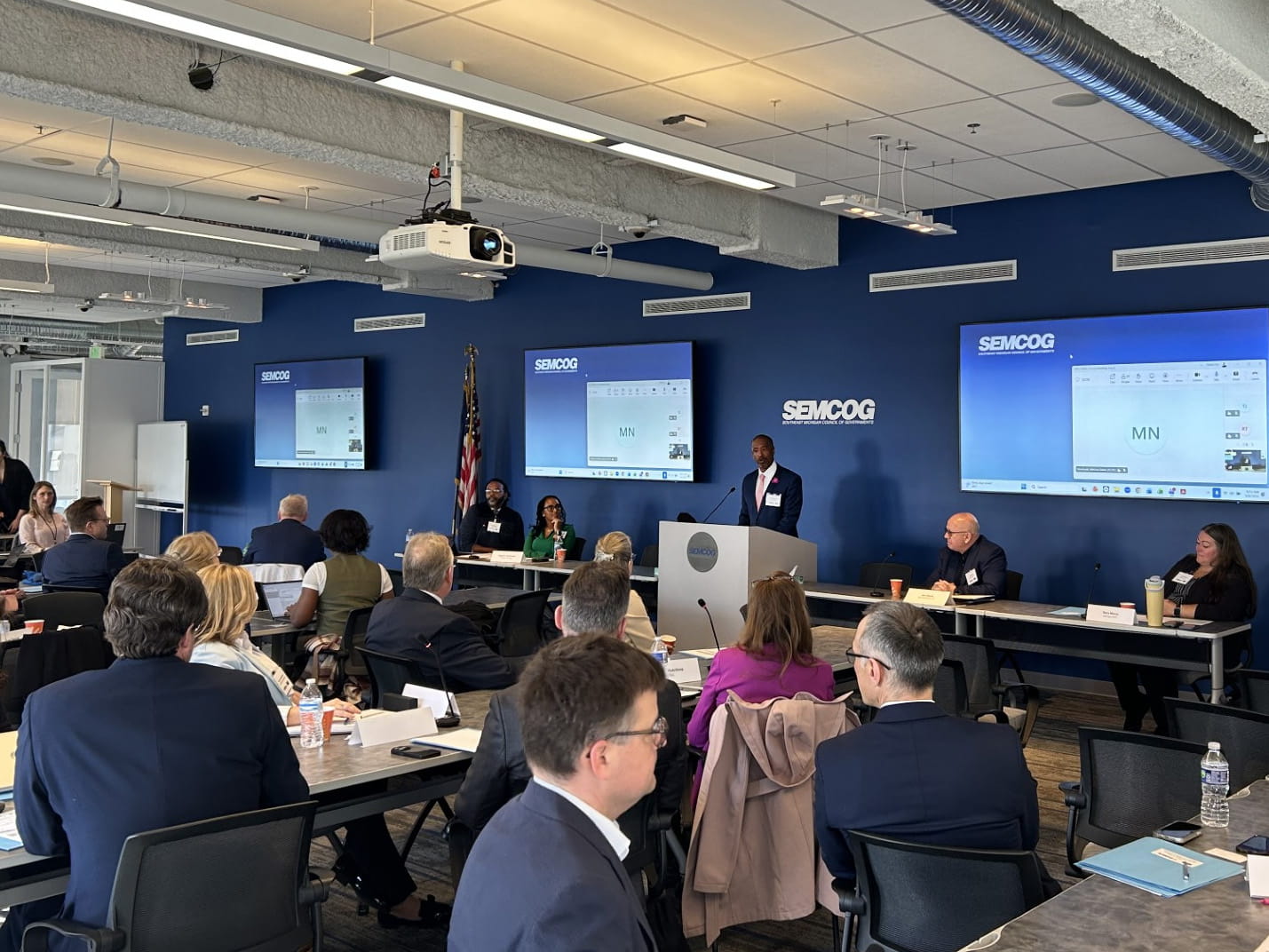
Scott Benson, Detroit City Councilman District 3, Detroit
Efficiency and reliability are critical to the supply chains of the auto industry to keep manufacturing plants operational across the international border. The dominance of the Windsor-Detroit corridor results from its location connecting the most intensive clusters of automotive production in Canada with corresponding clusters in the US.
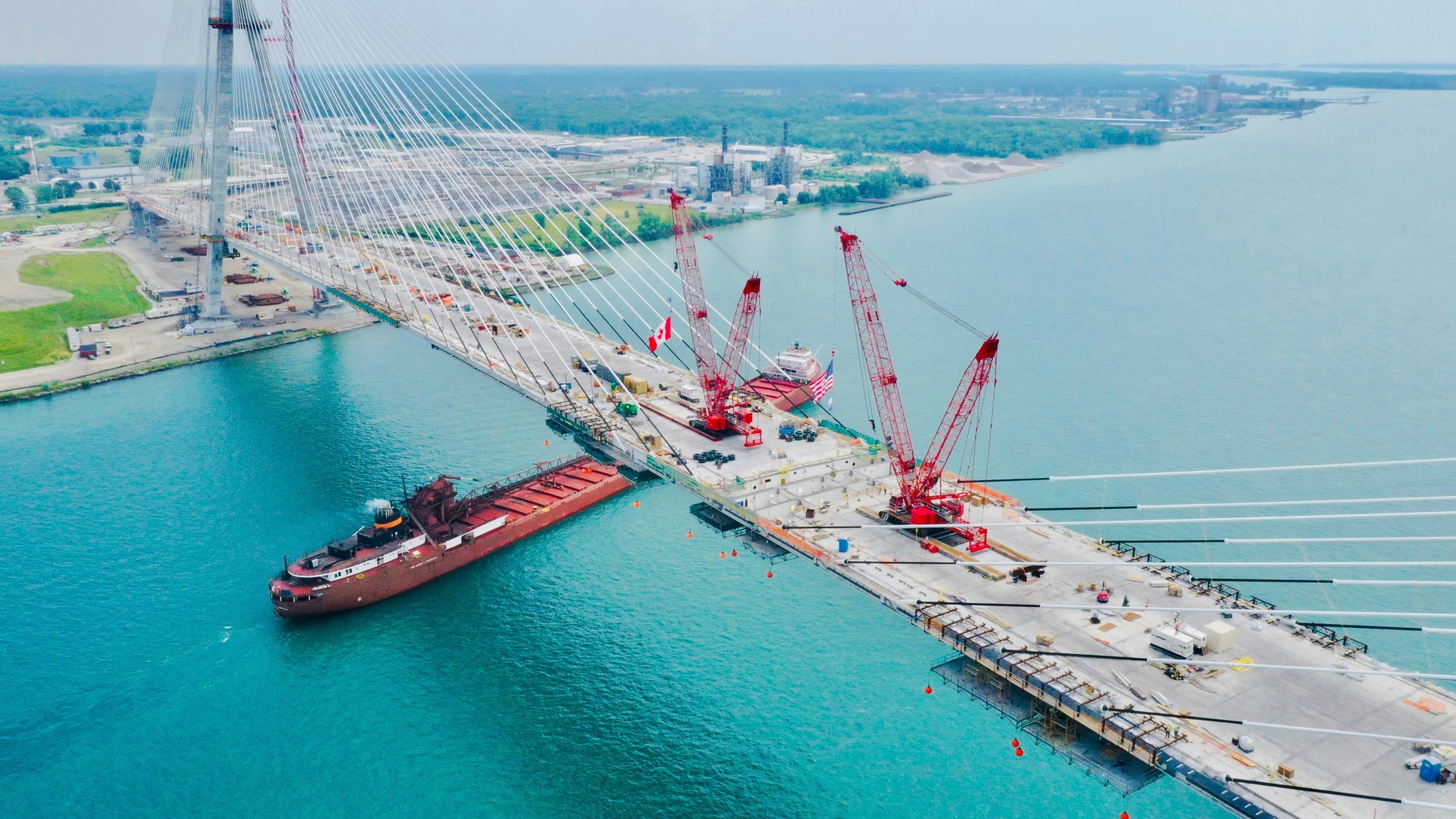
Construction of Gordie Howe International Bridge
Industries rely on efficient border crossings to maintain the health of their business operations. The completion of the new Gordie Howe International Bridge, a $7B structure funded by Canada, will provide critical redundancy and enhance freight and goods movement. It will also create air quality benefits by relieving congestion. Freight movement will also benefit from the direct highway to highway connection and avoidance of 17 traffic signals on Huron-Church Road in Windsor.
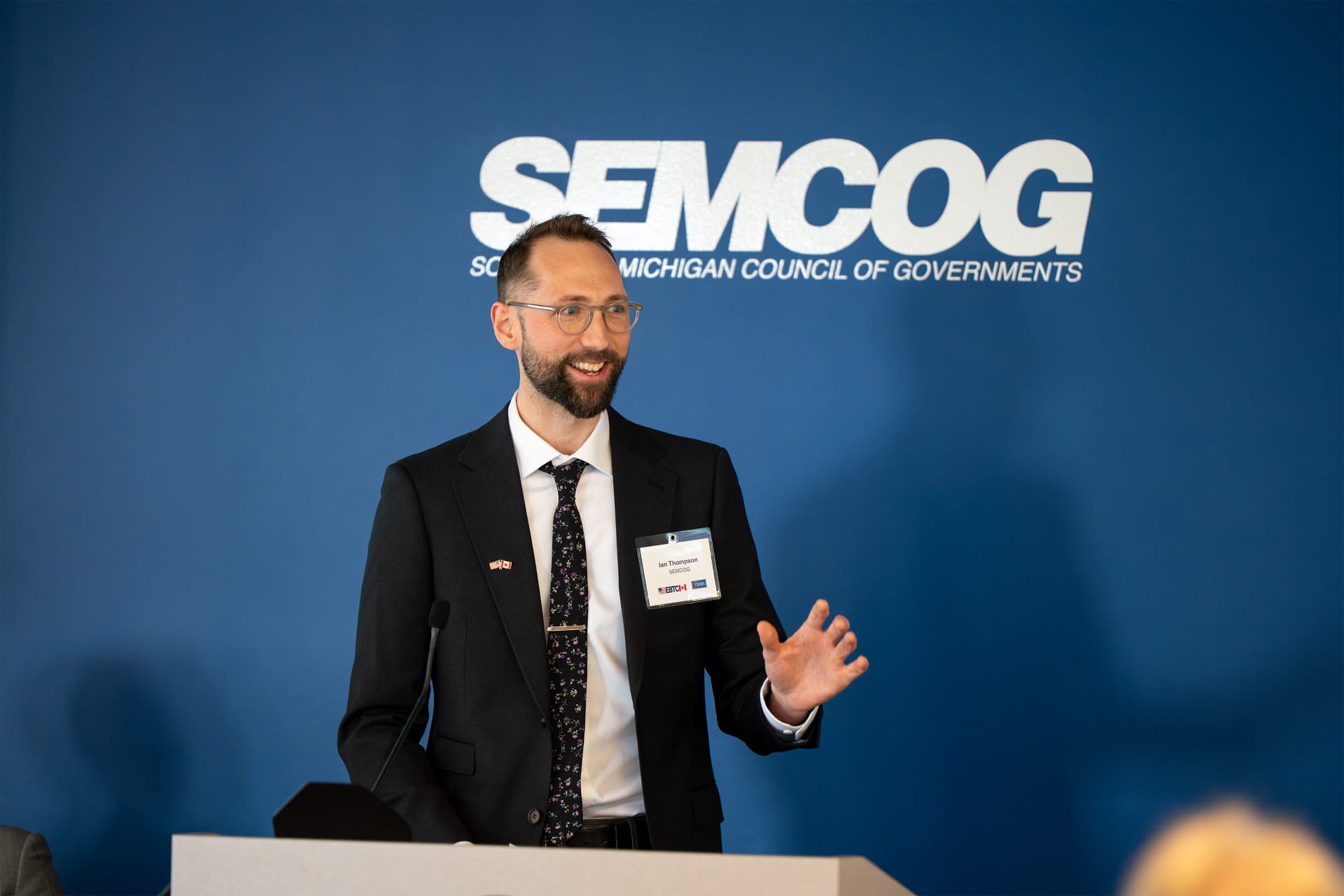
Ian Thompson, Transportation Planner II, SEMCOG
Outro
Maintaining and managing Michigan’s international border crossings involves dealing with a number of diverse and complex issues. Capacity, congestion, delays, the growth in international trade, homeland security, and the deteriorating physical conditions of aging infrastructure are but a few. SEMCOG was very pleased to host TBWG/EBTC and spend time with our colleagues from each side of the border. It is meaningful for us to be a part of a group providing leadership and informed dialog in improving the movement of goods and people across the Canada–US border.
Leave a Reply