
A recent groundbreaking for a new supportive housing development in the City of Southfield reminded me of the adage, “It takes a village.” It was clear attending this event how motivated numerous partners were determined to make it happen, however long it took. They included local, county, and state government, courts, private funders, developers, public health, housing advocates, and the community.
Wellspring Apartments will provide 60 units of permanent supportive housing in a park-like setting with patio seating, a walking path, and public art with access to a multi-community trail system. It will provide individuals recovering from addiction with stable housing and supportive services – which is a huge part of their recovery. The project also includes 12 units of housing for income-eligible households. This two-phase project is expected to be completed by December 2026.
The project is led by Southfield Nonprofit Housing Corporation, Cinnaire Solutions, and MiSide Community Impact Network, with the support of many other organizations. It came together because of the commitment of a set of diverse partners. Representatives of many of them spoke about the value of supportive housing and their roles.

Groundbreaking with representatives of partner organizations including Oakland County, City of Southfield, MiSide, Cinnaire, Michigan State Housing Development Authority (MSHDA), Michigan Department of Health and Human Services, and Michigan Association of Treatment Court Professionals
In her remarks, Congresswoman Rashida Tlaib recognized the crisis in housing particularly for individuals with mental health and substance abuse challenges. She commended the Oakland County judges and the Michigan Association of Treatment Courts in providing options to people coming before them.

Rashida Tlaib, Congresswoman with Mark McDaniel, President and CEO, Cinnaire
In his advocacy for housing, City of Southfield Mayor Kenson Siver chairs the Southfield Nonprofit Neighborhood Corporation, which focuses on building and preserving affording housing in the city. This community-based organization has built many housing units since its founding, and there are plans for many more. He recognized the support of City Council, residents, and community leaders as well as City Administrator, Fred Zorn. Zorn discussed the very complex funding structure of the Wellspring development and the role of all the partners in ensuring units were affordable. These include LIHTC, contribution from Michigan’s opioid settlement, Oakland County Housing Trust Fund, Cinnaire, and Southfield Nonprofit Neighborhood Corporation. He also talked the city’s commitment to growing the availability of quality affordable housing with several planned projects.
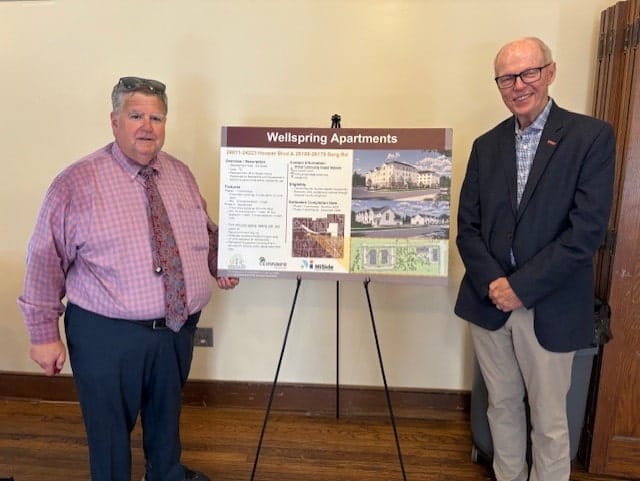
Fred Zorn, City Administrator and Ken Siver, Mayor, City of Southfield
Oakland County Executive Dave Coulter, another champion for housing, recognized the County Board of Commissioners for approving funding for the County’s Housing Trust Fund, This will enable affordable, attainable and workforce housing development to meet the diverse needs of communities and residents across the county. He also recognized the Judges in the court system, service providers and County housing leaders.
Dr. Natasha Bagdasarian, Michigan’s Chief Medical Executive chairs the State’s Opioid Task Force and believes that safe secure housing is an essential part of the recovery. The State’s funding from the Opioid Settlement will help expand treatment and programs.
Elizabeth Rademacher administers the Low Income Housing Tax Credit (LIHTC) program at the Michigan State Housing Development Authority (MSHDA) emphasized MSHDA’s commitment to supportive housing and long-term recovery because of the connection of quality housing to health outcomes and economic stability.
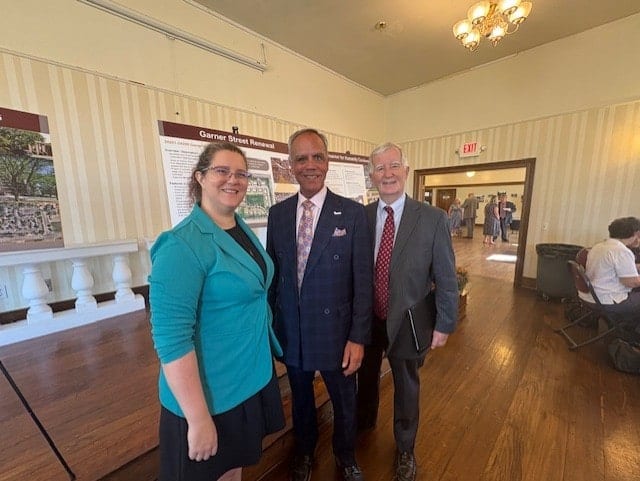
Elizabeth Rademacher, Allocations Manager, MSHDA, Mark McDaniel, CEO, Cinnaire Solutions, and Retired Judge Harvey Hoffman, Michigan Association of Treatment Court Professionals
President and CEO of MiSide Community Impact Network, an organization based in Southwest Detroit provides on-site services and wraparound support. DeFour began his career as a drug treatment counselor and stressed the importance of a stable place to live along with community support and wrap around services because “every risk factor jeopardizes recovery from addiction.”
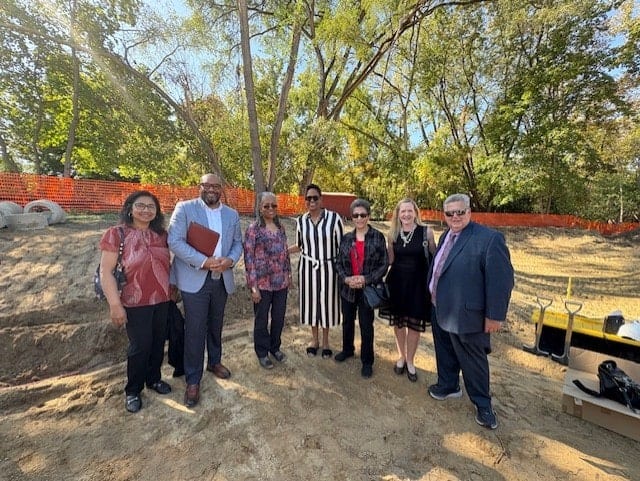
MiSide Leadership with partners
Wellspring was modeled on Andy’s Place in Jackson, a supportive housing development initiated by Mike Hirst who lost his son to opioid addiction at the age of 19. Mike spoke about the rapid deterioration of a smart and active sixteen-year old high school student to someone who became addicted to opioids, tried rehab three times and ended up in jail, before a fatal overdose. Mike feels that a supportive housing environment could have helped his son and is dedicated to making sure that other young people and their families understand the dangerous influence of drugs while also advocating for more help for them from employers, community members and healthcare professionals. Recidivism at Andy’s place in Jackson is less than 1% after three years.
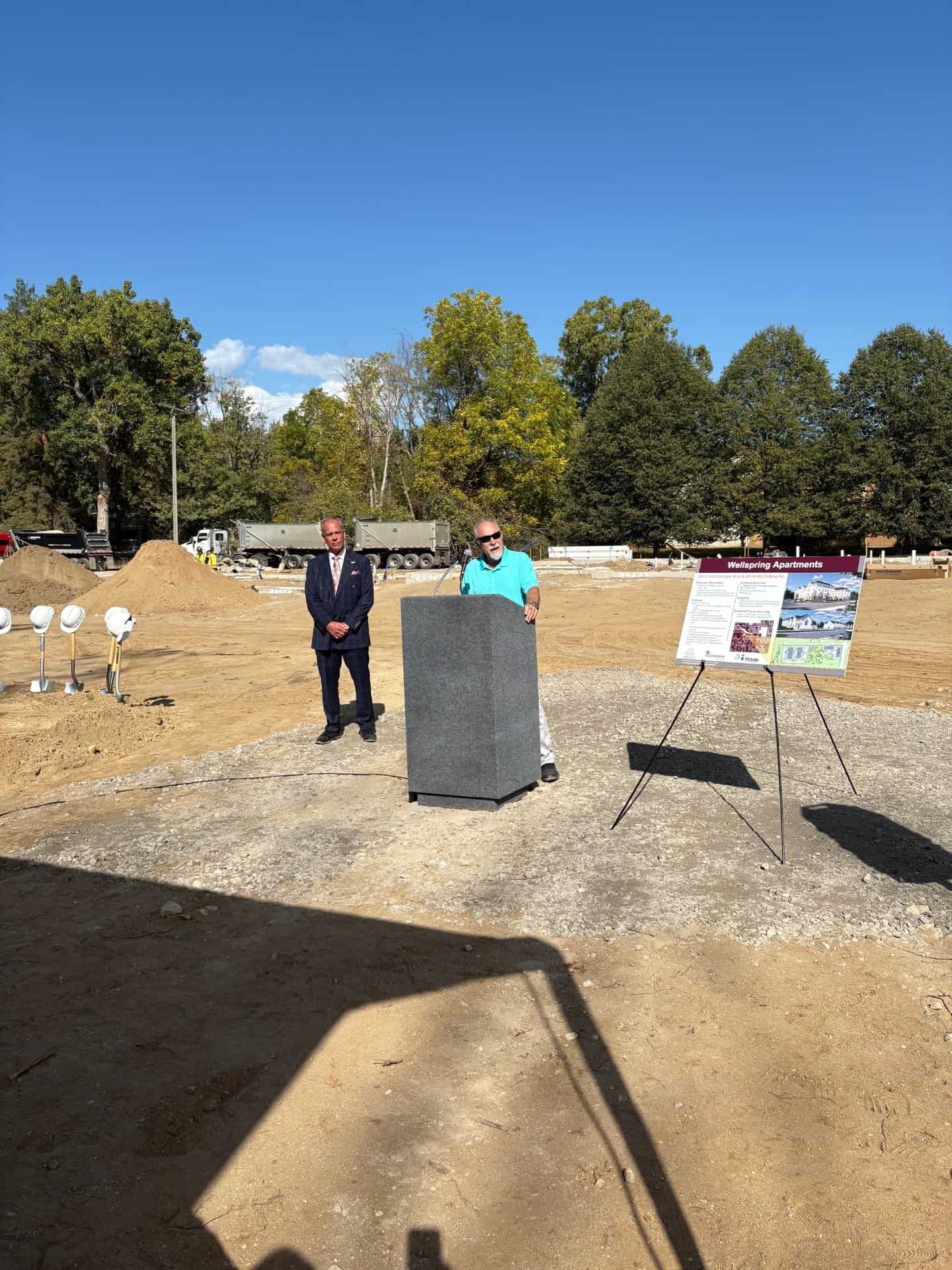
Mike Hirst speaks about the need for supportive housing
Mark McDaniel, President and CEO of Cinnare Solutions facilitated the groundbreaking event spoke about his own family’s experience with alcohol and drug addiction. He saw how supportive housing can turn lives around and lead to productive employment and career stability and success. Supportive services can help young people restore their dignity, self worth and self esteem while rebuilding their lives through online classes including financial literacy, employment assistance and mental health support. People have been able to get jobs, build businesses and contribute to their communities because of the support and commitment of a broad range of partners who see the impact on individual and community benefit.
Wellspring is just one of many new developments being planned for Southfield to meet the housing needs of its different populations. Several more developments are currently being built or renovated to add hundreds of new units of senior housing, family housing, housing built for individuals with disabilities, and market-rate housing. Two major adaptive reuse projects are converting old school buildings into housing units. The McKinley Place Condominums project will create 40 market-rate units in the former McKinley School while the John Grace Arms project will provide 60 units of senior housing – 18 in the former John Grace school building and 42 in a new addition. The City is also focused on commercial and mixed-use development. By being creative, inclusive, and collaborative, Southfield is demonstrating how projects can help expand housing options, create jobs, and help improve quality of life for the whole community.
2 responses to “Meeting Community and Housing Needs through Local, State, and Community Partnerships”
Posted by Carolyn Adams
How do I get a application for these new units?
Posted on December 24, 2025 at 9:54 am
Posted by Betty Thompson
Hello how are you guys? I was wondering how do I apply for Wellspring in Southfield I’m a low class working mother of 2 school age children. Im facing eviction and have exhausted all resources
Posted on November 11, 2025 at 10:17 pm