
In a previous blog, I shared some tools to Better Visualize Southeast Michigan’s Bicycle and Pedestrian Mobility Network. It helped pinpoint locations of existing and planned bicycle and pedestrian facilities, regional trails, and other bicycle friendly roadways across the region.
Today, I want to highlight some new tools to assist your roadway and trailway planning efforts, courtesy of SEMCOG’s new Bicycle and Pedestrian Mobility Plan for Southeast Michigan.
These tools are:
- Updates to SEMCOG’s Regional Bicycle and Pedestrian Mobility Network Map,
- Bicycle and pedestrian user statistics,
- Bicycle and pedestrian demand areas,
- Equity emphasis areas, and
- Regional bicycle and pedestrian corridors.
Each of these tools may be helpful to communities who are interested in:
- Updating planning documents (master plans, recreation master plans, transportation plans, DDA plans, etc.),
- Prioritizing projects for implementation and seeing how these projects complement neighboring efforts, and
- Applying for funding for a particular project, e.g., Transportation Alternatives Program (TAP), or DNR grants, which include the Recreation Passport Grant Program, Land and Water Conservation Fund, and Natural Resource Trust Fund.
If these tools sound interesting and useful to you, be sure to sign up for SEMCOG’s April 22 SEMCOG University Webinar: Enhancing Bicycle and Pedestrian Mobility, where we will discuss them in detail.
The first tool is an update to SEMCOG’s Regional Bicycle and Pedestrian Mobility Network Map. Based on your comments, SEMCOG updated the five tabs on the network map. Of note, one update is to the Regional Trail Network, which has been simplified to show where regional trails exist and where there are current plans to fill gaps in the trail network.

The second set of tools is based on user statistics – a bicycle and pedestrian survey, recreational “Hot Spots,” and bicycle and pedestrian counts. As part of the plan, SEMCOG conducted a survey that received 3,000+ responses, which asked important questions such as trip purpose, desired destinations, and perceived gaps/barriers. All of this information is reported at the regional and county level, but it can also be requested for individual communities and can help support how a project fits the needs of potential users.


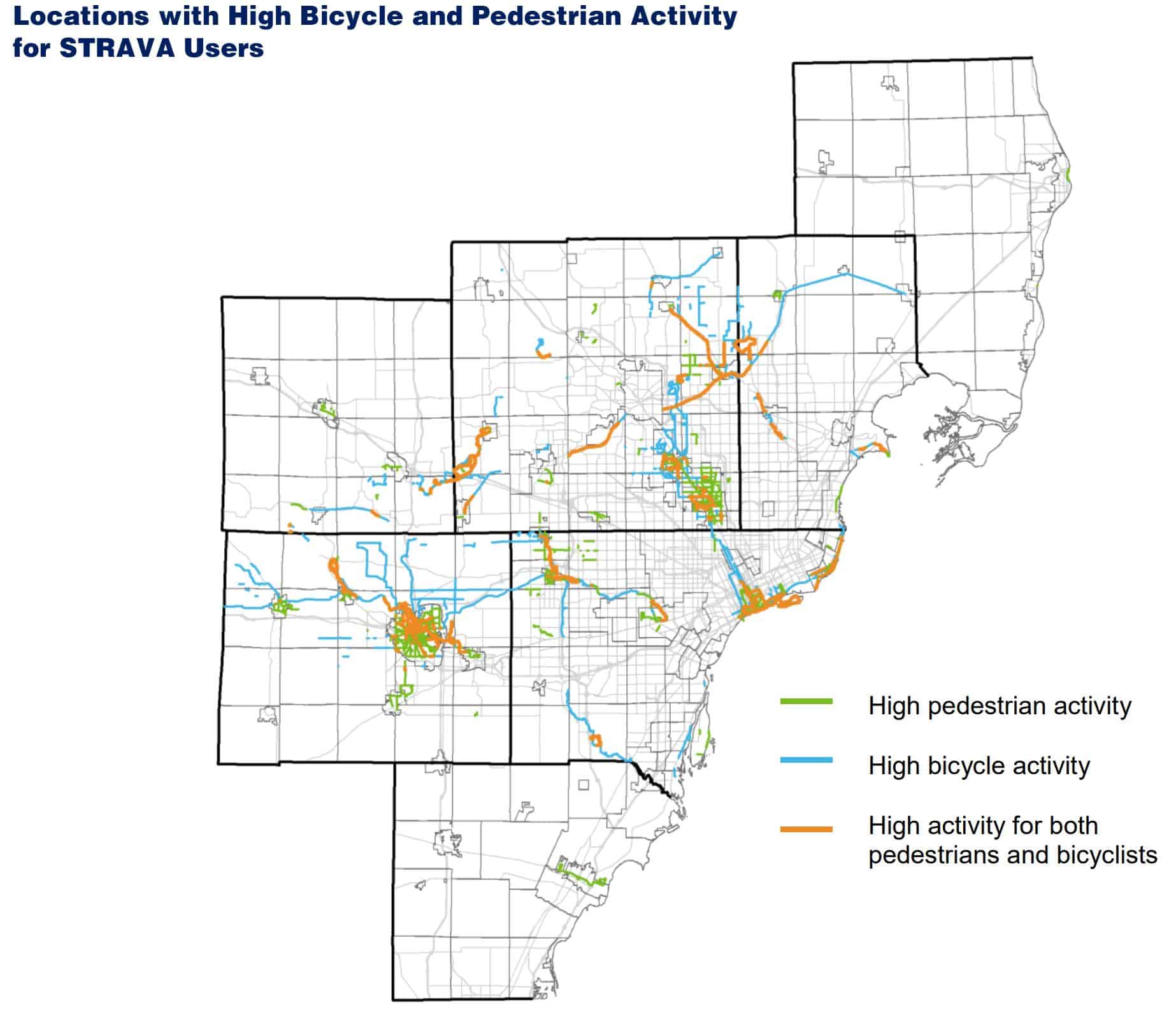
If you want to see where people are currently walking and biking, use our recreational hotspots dataset or counts map. The hotspots tool is a product derived from STRAVA, an app that lets users track their running and riding with GPS. It shows locations of high-activity pedestrians, bicyclists, or both. Hotspot data is available at the local level by request. Since it is used primarily by people exercising/training, SEMCOG feels it’s best to show recreation hotspots. If communities are looking for a truer picture of the total number of people walking or biking in a given area, check out SEMCOG’s Bicycle and Pedestrian Counts Map. This map shows where SEMCOG and local communities have conducted counts of pedestrians and bicyclists. Users can look to see if counts exist for their partial location, or if there is comparable data that can used for a given locale.

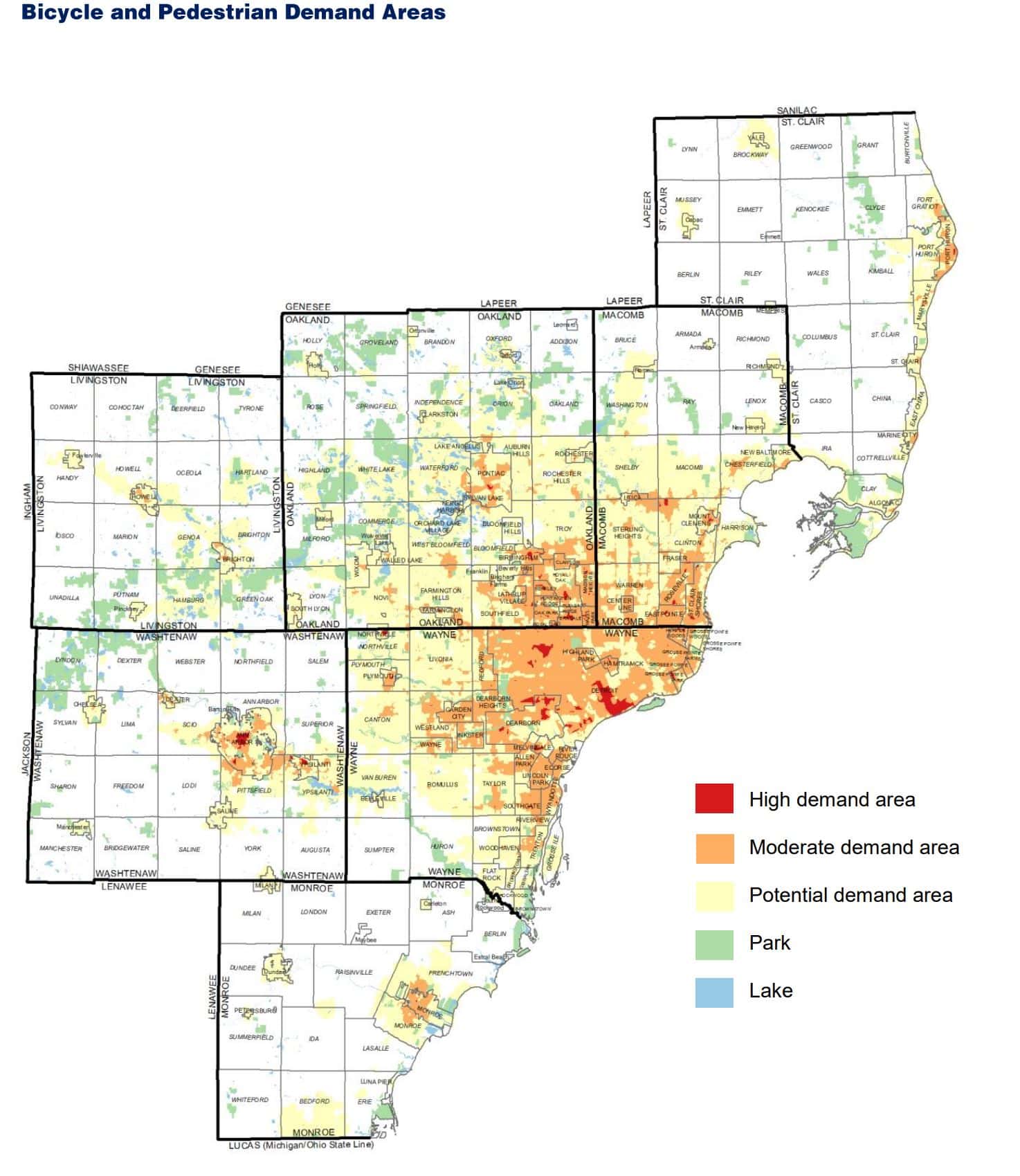
Communities and road agencies is looking for locations where bicycle and pedestrian facilities may have greater use for transportation/mobility purposes should check out SEMCOG’s Bicycle and Pedestrian Demand areas. These areas represent only 30 percent of our region, but they account for over 90 percent of bicycle and pedestrian infrastructure, STRAVA usage, and related bicycle and pedestrian crashes. Each of the three types of demand areas has distinct recommendations to help fill that demand. Furthermore, these areas can be used to analyze access to existing infrastructure and to prioritize projects.

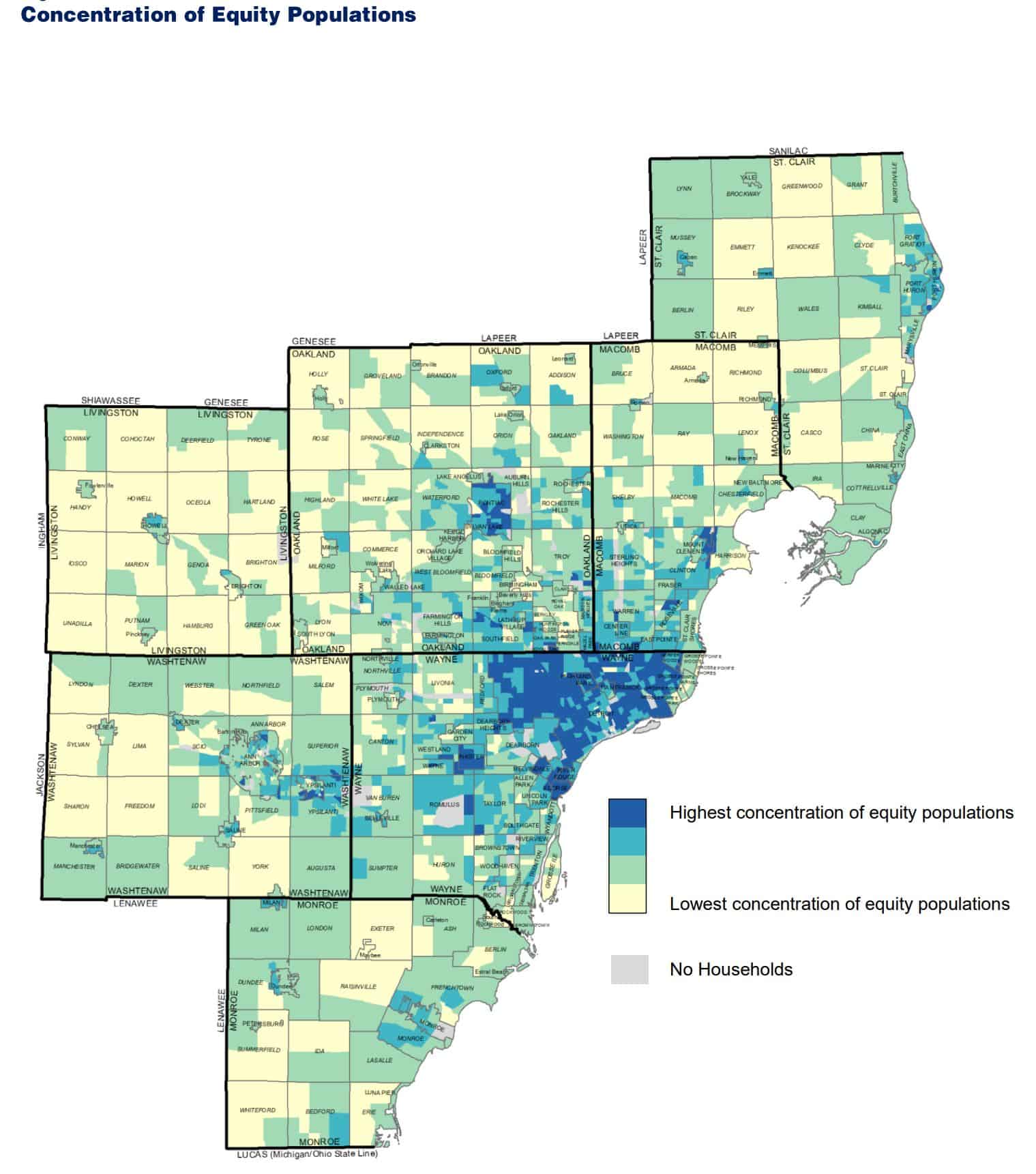
Similarly, communities can use SEMCOG’s Equity Emphasis Areas to ensure we are building infrastructure and programs for people of all ages and abilities.

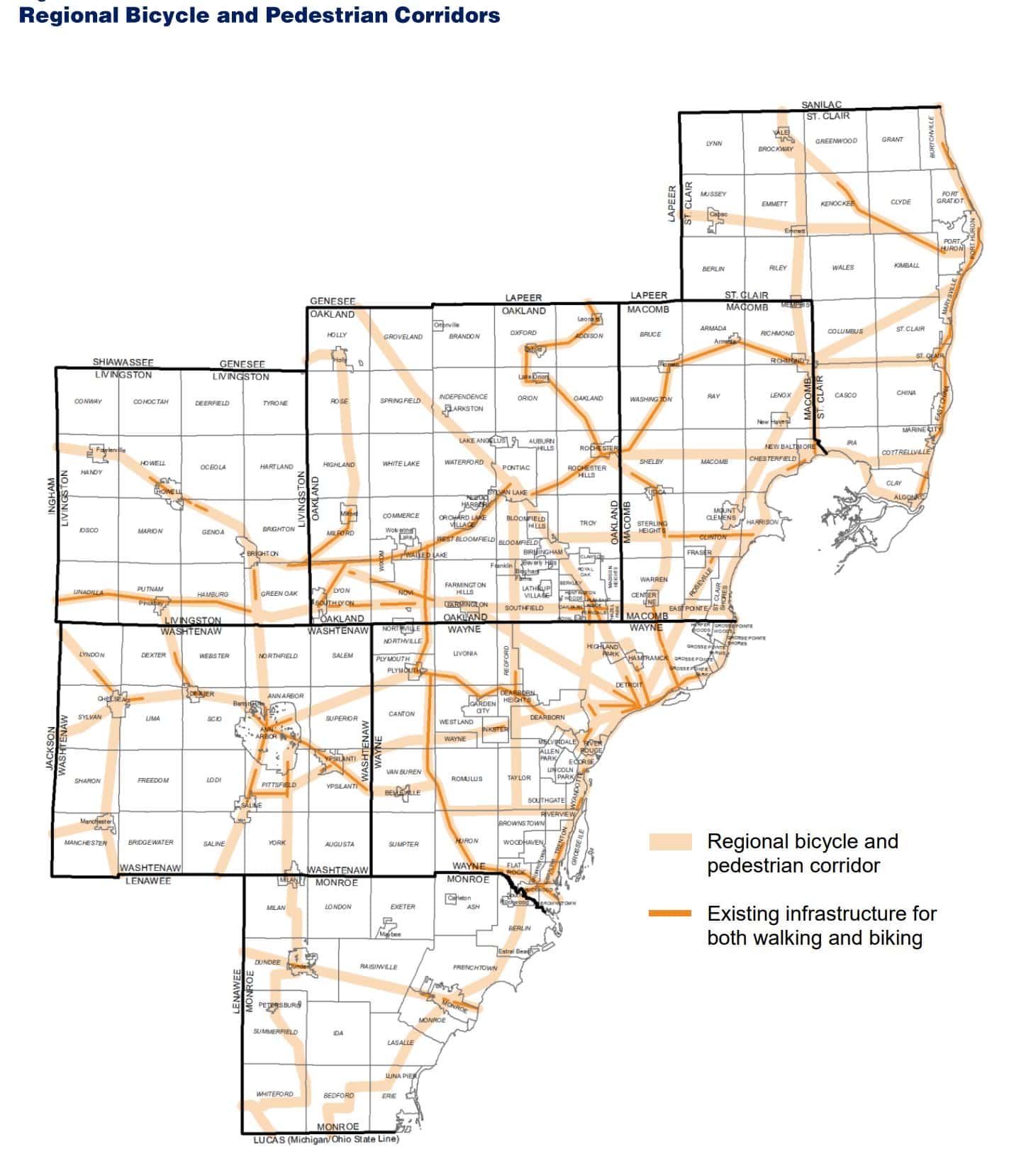
Finally, if communities want to see how a project aligns with regional connectivity, they should check out the Bicycle and Pedestrian Regional Corridors map (map can be found on page 10 of the plan). These regional corridors include a range of existing and planned infrastructure types, reflecting components of the regional trail network, designated bike routes, demand centers, and equity emphasis areas, along with other aspects of the system. They can be used to facilitate cross-jurisdictional collaboration toward a common vision for bicycle and pedestrian mobility in Southeast Michigan. If your project helps fill a gap in these corridors or provides a spur to a locale or regional asset, be sure to mention that in a grant application.
To learn more about these tools, sign up for SEMCOG’s April 22 SEMU Webinar: Enhancing Bicycle and Pedestrian Mobility.
Leave a Reply