
A version of this article was originally featured in SEMCOG’s Putting Safety First. It illuminates regional data that underscores the gravity of fatal and serious crashes in Southeast Michigan. As we reflect on the many lives impacted by preventable tragedies, it becomes evident that concerted action is imperative. SEMCOG’s Southeast Michigan Transportation Safety Plan identifies key safety needs and guides investment decisions to eliminate fatalities and serious injuries for all road users.
Transportation Safety Action Committee
The Transportation Safety Action Committee meets quarterly to exchange information on transportation safety efforts in the region and monitor the implementation of the Southeast Michigan Transportation Safety Plan. The group shares information about crash data analysis, grants, infrastructure projects, best practices, new technologies, and more. Committee members include local government representatives, road agencies, law enforcement, safety and nonmotorized experts, mobility advocates, and other stakeholders working to eliminate traffic fatalities and serious injuries in Southeast Michigan. Pedestrians, bicyclists, and motorcyclists are identified as the top-priority road users, reflecting a commitment to the safety of vulnerable groups.
Quarterly Collaboration for Safer Roads
This proactive approach involves quarterly meetings to exchange information and monitor the implementation of the transportation safety plan. Interested stakeholders can register for upcoming meetings on SEMCOG’s website. The plan, treated as a living document, is subject to continuous monitoring and adjustment by the Transportation Safety Action Committee, ensuring adaptability to emerging safety issues and opportunities.
“Achieving a safe transportation system is an ongoing process that requires constant communication and collaboration between numerous stakeholders. When we collaborate and coordinate a safe systems, vision zero approach to transportation planning we can reduce and ultimately end preventable tragedies on our roadways.” – Ryan Buck, Director of Washtenaw Area Transportation Study (WATS) and Member of SEMCOG Transportation Safety Action Committee
Technical Assistance
SEMCOG supports local safety planning and implementation with data-driven tools, such as speed data, location-based data to understand travel patterns, travel demand models, and the Multimodal Tool. SEMCOG staff can help member communities improve traffic safety by providing technical assistance in order to identify specific traffic safety concerns and countermeasures to improve safety performance.
Testimonials: SEMCOG Technical Assistance
“SEMCOG staff were responsive and timely regarding the City of Trenton’s desire to add a trail to an upcoming Wayne County bridge project on West Road. Through their assistance, we were able to convince the county to create safer biking and walking conditions across a bridge-a project that comes once in a generation.” – Wendy Lynn Pate, former Councilmember, City of Trenton
“Armada’s a small community. SEMCOG stepped in to help and advise us on two transportation issues important to the community when other agencies wouldn’t invest the time. With SEMCOG’s guidance and direction, we’re confident we can now negotiate the grant opportunities available to us and talk to organizations that can help get our projects done.” – Ross Boelke, Trustee, Village of Armada
“For a Township without deep resources in grant writing and knowledge, SEMCOG has been a valuable resource in developing applications for a HAWK signal addressing pedestrian safety, and our SPARK application for our pedestrian Riverwalk pathway.” – Mark Monohon, Trustee, Waterford Township
Our ability has been magnified by the technical and leadership skills of SEMCOG. It’s why we are SEMCOG members; to work together and leverage the expertise and support of the SEMCOG team. From technical resources to funding opportunities, Monroe County used all the resources at our disposal to get us to the point where our applications can go forward across multiple project funding opportunities.” – Michael Bosanac, Administrator/Chief Financial Officer, Monroe County
Funding Programs Focused on Safety
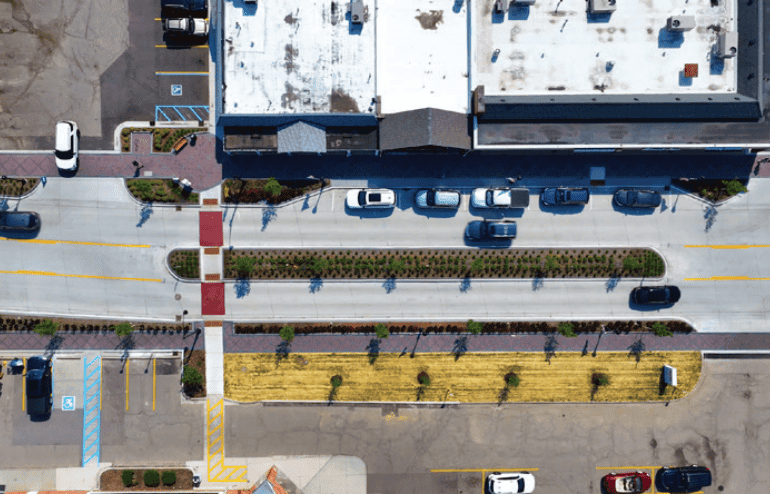
City of Farmington
To improve outcomes across the transportation system, safety should be a top priority for ALL transportation and mobility projects (not just “safety” projects). As such, safety should be a key consideration for all projects submitted for Southeast Michigan’s Transportation Improvement Program (TIP). However, additional opportunities are available for strategic safety investments. These include:
- Transportation Alternatives Program (TAP), which supports pedestrian and bicycle infrastructure, environmental mitigation, and Safe Routes to School programs
- Safe Streets and Roads for All (SS4A)
- Highway Safety Improvement Program (HSIP)
- Office of Highway Safety Planning Grants
- Surface Transportation Block Grant Program (STBG)
Legislation and Regulations: Strengthening Safety Laws
Southeast Michigan advocates for legislative and regulatory measures that prioritize safety:
- Updates to the statewide speed limit-setting procedure
- Enhancing child passenger safety laws
- Efforts to enhance motorcycle safety
- Prioritizing vulnerable road user safety and mobility
As Southeast Michigan continues its journey towards safer roads, the commitment to education, technical assistance, funding, and legislative support remains unwavering. The collaborative efforts of the Transportation Safety Action Committee and the Safe Streets Southeast Michigan campaign initiative set a strong foundation for a transportation system that prioritizes safety for all. Local governments are encouraged to support legislative initiatives.
Safe Streets for All (SS4A) Brings Millions of Dollars to Southeast Michigan
In December 2023, SEMCOG and several of our members were awarded Safe Streets for All funding totaling over $64 million. SEMCOG funds will be used to complete demonstration projects focused on vulnerable road users. These will be located in equity emphasis areas, the High Injury Network, and/or Bicycle and Pedestrian Demand Areas. Examples of demonstration countermeasures that will be installed include bike lanes, cycle tracks, bulb-outs, speed humps, pedestrian refuge islands, gateway treatments, and enhanced crosswalk pavement markings using temporary materials such as paint, bollards, planter boxes, and rubber curbs to separate users in space and time and reduce impact forces through reducing speeds.
The City of Detroit received $24.8 million, one of several awards to Southeast Michigan from SS4A, to improve safety and bus stop accessibility at 56 high-crash intersections served by the Detroit Department of Transportation (DDOT) bus service. The city will also conduct a Level of Traffic Stress analysis to address gaps in bicyclist/pedestrian networks, update the City’s Comprehensive Safety Action Plan (CSAP), and pilot training for DDOT bus operators to ensure safe operations around people walking and biking. The City of Detroit has one of the highest traffic fatality rates in the country.
“These grants represent a significant opportunity to address systemic traffic violence on our streets. The Safe Streets for Detroit and the Detroit Safe Access to Transit projects are pivotal initiatives that will jump start our traffic safety program and play a crucial role in advancing strategies outlined in our Comprehensive Safety Action Plan. We understand the responsibility that comes with this funding and are dedicated to implementing proven safety countermeasures that will make our streets safer for all Detroit residents and visitors. Together, these projects will help us realize our shared vision in which everyone arrives to their destination safely every time.” – James Hannig, Deputy Director, City of Detroit DPW, Complete Streets
Transportation Alternatives Program (TAP)

Shelby Township
TAP projects are transportation-related improvements to roadways, local streets, and corridors. Most often, they address mobility options through new or enhanced bicycle and pedestrian infrastructure. This includes things such as pathways, bike lanes, sidewalks, and pedestrian crossings. These projects improve the existing transportation system, while providing safe new options to help people connect to transit, regional trails, and core service destinations. TAP can also fund green infrastructure projects that mitigate environmental concerns from the road network. Annually, SEMCOG awards over $10 million in TAP funds. Example safety improvement projects include:
- City of Farmington – Widened sidewalks; improved crosswalks (including bumpouts); pedestrian lighting; landscaping; and other amenities such as bike racks, trash receptacles, and benches
- Genoa Township – New sidewalk with ADA enhancements along Grand River
- Village of Romeo – ADA and improved pedestrian crosswalks throughout Downtown
- Shelby Township – Pedestrian crossing improvements closing gaps over M-53 at six locations along 21 Mile, 22 Mile, 24 Mile, and 25 Mile roads
Leave a Reply